Información sobre este eBook
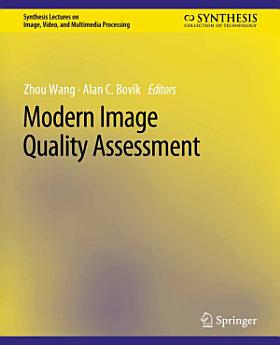
This Lecture book is about objective image quality assessment—where the aim is to provide computational models that can automatically predict perceptual image quality. The early years of the 21st century have witnessed a tremendous growth in the use of digital images as a means for representing and communicating information. A considerable percentage of this literature is devoted to methods for improving the appearance of images, or for maintaining the appearance of images that are processed. Nevertheless, the quality of digital images, processed or otherwise, is rarely perfect. Images are subject to distortions during acquisition, compression, transmission, processing, and reproduction. To maintain, control, and enhance the quality of images, it is important for image acquisition, management, communication, and processing systems to be able to identify and quantify image quality degradations. The goals of this book are as follows; a) to introduce the fundamentals of image quality assessment, and to explain the relevant engineering problems, b) to give a broad treatment of the current state-of-the-art in image quality assessment, by describing leading algorithms that address these engineering problems, and c) to provide new directions for future research, by introducing recent models and paradigms that significantly differ from those used in the past. The book is written to be accessible to university students curious about the state-of-the-art of image quality assessment, expert industrial R&D engineers seeking to implement image/video quality assessment systems for specific applications, and academic theorists interested in developing new algorithms for image quality assessment or using existing algorithms to design or optimize other image processing applications.
This Lecture book is about objective image quality assessment—where the aim is to provide computational models that can automatically predict perceptual image quality. The early years of the 21st century have witnessed a tremendous growth in the use of digital images as a means for representing a...
Descubre más
Valorar este eBook
Danos tu opinión.
Información sobre cómo leer
Smartphones y tablets
Instala la aplicación Google Play Libros para Android y iPad/iPhone. Se sincroniza automáticamente con tu cuenta y te permite leer contenido online o sin conexión estés donde estés.
Ordenadores portátiles y de escritorio
Puedes usar el navegador web del ordenador para escuchar audiolibros que hayas comprado en Google Play.
eReaders y otros dispositivos
Para leer en dispositivos de tinta electrónica, como los lectores de libros electrónicos de Kobo, es necesario descargar un archivo y transferirlo al dispositivo. Sigue las instrucciones detalladas del Centro de Ayuda para transferir archivos a lectores de libros electrónicos compatibles.