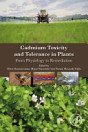
About this ebook
Discover more
About the author
Mirza Hasanuzzaman is a professor of agronomy at Sher-e-Bangla Agricultural University, Dhaka, Bangladesh. He received his PhD from the United Graduate School of Agricultural Sciences. Later, he completed his postdoctoral research in the Center of Molecular Biosciences (COMB), University of the Ryukyus, Okinawa, Japan. Subsequently, he became an adjunct senior researcher at the University of Tasmania with an Australian government’s Endeavour Research Fellowship. Over his career he has mentored numerous master's, doctoral, and postdoctoral researchers and has published widely on plant physiology, plant stress responses, and environmental challenges affecting plant species, including authored and edited books and book chapters. He serves as an editor and reviewer for many peer-reviewed international journals and was a recipient of the Publons Peer Review Awards (2017, 2018, and 2019). He is an active member of numerous professional societies and holds office as acting general secretary of the Bangladesh JSPS Alumni Association and as publication secretary of both the Bangladesh Society of Agronomy and the Weed Science Society of Bangladesh. His honors include the World Academy of Sciences (TWAS) Young Scientist Award (2014), the University Grants Commission (UGC) Gold Medal (2018), the Bangladesh Academy of Sciences (BAS) Gold Medal Award (Senior Group, 2022), the Global Network of Bangladeshi Biotechnologists (GNOBB) Award (2021), and the Society for Plant Research Young Scientist Award (Agriculture, 2023). He is a fellow of the Bangladesh Academy of Sciences (BAS), the World Academy of Sciences (TWAS), the Royal Society of Biology, and the International Society of Environmental Botanists, and a foreign fellow of the Society for Science of Climate Change and Sustainable Environment.
Dr. Prasad is Emeritus Professor, School of Life Sciences, University of Hyderabad (India). He has made outstanding contributions to the fields of bioremediation, bioresources, biomass energy sources, bioeconomy, and to the broad field of environmental biotechnology, all of which are his main areas of expertise. Dr. Prasad has served the Government of India’s Ministry of Environment, Forests and Climate Change as a member of various advisory committees on biodiversity conservation, ecosystem services, pollution control and abatement, environmental information systems and bioremediation of contaminated sites. He is an active visiting scientist for several international universities.