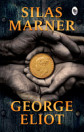
Información sobre este eBook
"One of the few English novels written for grown-up people." —Virginia Woolf "What do I think of 'Middlemarch'? What do I think of glory — except that in a few instances this 'mortal has already put on immortality.' George Eliot was one. The mysteries of human nature surpass the 'mysteries of redemption,' for the infinite we only suppose, while we see the finite." —Emily Dickinson "'Middlemarch' is probably the greatest English novel." —Julian Barnes "They've [women] produced the greatest writer in the English language ever, George Eliot, and arguably the third greatest, Jane Austen, and certainly the greatest novel, 'Middlemarch'..." —Martin Amis By the time the novel appeared to tremendous popular and critical acclaim in 1871-2, George Eliot was recognized as England's finest living novelist. It was her ambition to create a world and portray a whole community--tradespeople, middle classes, country gentry--in the rising provincial town of Middlemarch, circa 1830. Vast and crowded, rich in narrative irony and suspense, "Middlemarch" is richer still in character, in its sense of how individual destinies are shaped by and shape the community, and in the great art that enlarges the reader's sympathy and imagination. It is truly, as Virginia Woolf famously remarked, 'one of the few English novels written for grown-up people'.
"One of the few English novels written for grown-up people." —Virginia Woolf "What do I think of 'Middlemarch'? What do I think of glory — except that in a few instances this 'mortal has already put on immortality.' George Eliot was one. The mysteries of human nature surpass the 'mysteries of red...
Descubre más
Acerca del autor
Although female authors were published under their own names during her lifetime, she wanted to escape the stereotype of women's writing being limited to lighthearted romances. She also wanted to have her fiction judged separately from her already extensive and widely known work as an editor and critic. Another factor in her use of a pen name may have been a desire to shield her private life from public scrutiny, thus avoiding the scandal that would have arisen because of her relationship with the married George Henry Lewes.
Although female authors were published under their own names during her lifetime, she wanted to escape the stereotype of women's writing being limited to lighthearted romances. She also wanted to have her fiction judged separately from her already extensive and widely known work as an editor and ...
Valorar este eBook
Danos tu opinión.
Información sobre cómo leer
Smartphones y tablets
Instala la aplicación Google Play Libros para Android y iPad/iPhone. Se sincroniza automáticamente con tu cuenta y te permite leer contenido online o sin conexión estés donde estés.
Ordenadores portátiles y de escritorio
Puedes usar el navegador web del ordenador para escuchar audiolibros que hayas comprado en Google Play.
eReaders y otros dispositivos
Para leer en dispositivos de tinta electrónica, como los lectores de libros electrónicos de Kobo, es necesario descargar un archivo y transferirlo al dispositivo. Sigue las instrucciones detalladas del Centro de Ayuda para transferir archivos a lectores de libros electrónicos compatibles.