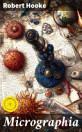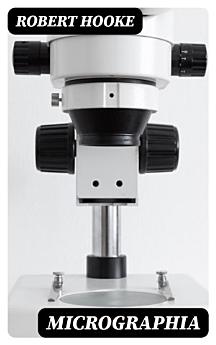
Micrographia: Some Physiological Descriptions of Minute Bodies Made by Magnifying Glasses with Observations and Inquiries Thereupon
Robert Hooke
sept. 2022 · DigiCat
E-book
373
Pages
family_home
Éligible
info
À propos de cet e-book
In 'Micrographia', Robert Hooke embarks on a groundbreaking exploration of the microscopic world, unveiling the previously invisible intricacies of nature through meticulous observation and detailed illustrations. This seminal work, published in 1665, represents a significant shift in scientific inquiry, paralleling the rise of the scientific revolution. Hooke's prose weaves together eloquent description with empirical observation, providing a vivid account of his experiments that range from the structure of a flea to the intricate patterns of a cork's cellular structure. His innovative use of the microscope not only revolutionizes biology but also sets a precedent for the visual representation of scientific findings. Robert Hooke, an esteemed polymath and member of the Royal Society, was deeply influenced by the intellectual currents of his time, particularly the emphasis on observation as a means of knowledge. His background in physics, architecture, and natural history equipped him with a unique perspective that allowed him to interpret his observations in innovative ways. Hooke's collaborative nature and friendship with contemporaries like Sir Isaac Newton positioned him at the forefront of scientific discourse, driving his desire to share the wonders he unearthed through his lens. '*****Micrographia'***** is indispensable for anyone seeking to understand the origins of modern microscopy and its implications on life sciences. This work not only provokes a sense of wonder about the natural world but also encourages a deeper appreciation for the intricate details that define our universe. Reading Hooke's text will enrich your understanding of both historical scientific methods and the profound nature of inquiry.
In 'Micrographia', Robert Hooke embarks on a groundbreaking exploration of the microscopic world, unveiling the previously invisible intricacies of nature through meticulous observation and detailed illustrations. This seminal work, published in 1665, represents a significant shift in scientific ...
En voir d'autres
À propos de l'auteur
Robert Hooke (1635–1703) was a prolific English natural philosopher, architect, and polymath who played a significant role in the scientific revolution through his work and influence. A contemporary of Isaac Newton and Christopher Wren, Hooke made foundational contributions across multiple scientific disciplines. Most notably, in his capacity as Curator of Experiments for the Royal Society, Hooke authored 'Micrographia' (1665), a seminal work that offered the world one of its first detailed explorations into the realm of the microscopic. In 'Micrographia', Hooke not only coined the term 'cell' for the basic biological structures he observed in cork, but he also documented an extensive range of observations of minerals, fossils, and organisms, capturing the imagination of the scientific community with his detailed illustrations. Hooke's inquisitive nature and mechanical genius were evident in his varied inventions and improvements to scientific instruments, including the compound microscope. His literary style was characterized by both rigorous empirical observation and a certain vividness in description, which helped to make the sciences more accessible and captivating to a wider audience. Hooke's work contributed substantially to the evolution of scientific methodology, emphasizing observation, experimentation, and the use of advanced technology in natural inquiry.
Robert Hooke (1635–1703) was a prolific English natural philosopher, architect, and polymath who played a significant role in the scientific revolution through his work and influence. A contemporary of Isaac Newton and Christopher Wren, Hooke made foundational contributions across multiple scient...
Donner une note à cet e-book
Dites-nous ce que vous en pensez.
Informations sur la lecture
Smartphones et tablettes
Installez l'application Google Play Livres pour Android et iPad ou iPhone. Elle se synchronise automatiquement avec votre compte et vous permet de lire des livres en ligne ou hors connexion, où que vous soyez.
Ordinateurs portables et de bureau
Vous pouvez écouter les livres audio achetés sur Google Play à l'aide du navigateur Web de votre ordinateur.
Liseuses et autres appareils
Pour lire sur des appareils e-Ink, comme les liseuses Kobo, vous devez télécharger un fichier et le transférer sur l'appareil en question. Suivez les instructions détaillées du Centre d'aide pour transférer les fichiers sur les liseuses compatibles.