Advanced Space Propulsion: Technologies, Missions, and Computer Modeling
Michael Paluszek · Christopher A. Galea · Parisa Mirdamadi · Joyce Mo · Layla Mohsen Aboud · Stephanie J. Thomas
Aug 2026 · Elsevier
Ebook
700
Pages
family_home
Eligible
info
About this ebook
Advanced Space Propulsion: Technologies, Missions, and Computer Modeling includes coverage of all these topics in an integrated manner. The volume, written by a team of sector-specific R&D experts, touches upon fundamentals cardinal to the understanding of [i] Orbit theory and its implications for control, estimation, and optimization of trajectory and attitude, and [ii] How each mission is designed (depending primarily on the mass of the payload, but also on how far from Earth the launch vehicle needs to go), and then succeeds in consolidating them with software and computer applications for simulations and modeling. The book continues with a discussion on the complete gamut of in-space propulsion power sources and concludes with both human and robotic mission-related case studies and future implementation examples. The outcome is a carefully calibrated and self-contained resource that will prove to be invaluable for graduate and senior undergraduate students, researchers, scientists, and engineering professionals alike. - Covers all advanced propulsion technologies, both existing and future - Takes advantage of a structured and comprehensive approach to seamlessly combine theory, technological outcomes, and their practical applications - Features case studies and worked-out examples with MATLAB code
Advanced Space Propulsion: Technologies, Missions, and Computer Modeling includes coverage of all these topics in an integrated manner. The volume, written by a team of sector-specific R&D experts, touches upon fundamentals cardinal to the understanding of [i] Orbit theory and its implications fo...
Discover more
About the author
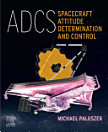
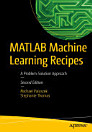
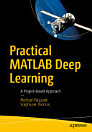
Michael Paluszek is the President of Princeton Satellite Systems, Inc. (PSS). He received a bachelor's degree in electrical engineering from the Massachusetts Institute of Technology (MIT) in 1976. He received a Master's and Masters and an Engineer's degree from MIT in Aeronautics and Astronautics in 1979. In 1992, Mr. Paluszek founded PSS in Plainsboro, New Jersey, to provide aerospace design services. He designed the control system and simulations for the Indostar-1 geosynchronous communications satellite, which launched in 1997, as well as a Mars Ascent Vehicle for a NASA RFP. He also designed a two-stage-to-orbit vehicle which uses a turbofan in the first stage for low-Mach numbers, and a ramjet with a hydrogen-fueled combustor for high-Mach flight. His current projects include a waverider hypersonic small package delivery aircraft and the Starfire fusion reactor for energy generation and space propulsion. Before founding PSS, Mr. Paluszek was an engineer at GE Astro Space in East Windsor, NJ. At GE, he designed the Global Geospace Sciences Polar despun platform control system and led the design of the GPS IIR attitude control system, the Inmarsat-3 attitude control systems, and the Mars Observer Delta-V control system. Mr. Paluszek flew communication satellites on over twelve satellite launches, including the GSTAR III recovery, the first transfer of a satellite to an operational orbit using electric thrusters. At Draper Laboratory, Mr. Paluszek worked on Space Shuttle and Space Station programs and on submarine navigation. His Space Station work included designing Control Moment Gyro-based attitude-control systems. He authored ``ADCS: Attitude Determination and Control Systems,'' published by Elsevier. Mr. Paluszek has also written numerous technical papers and has over a dozen U.S. Patents. He is also the lead co-author of ``MATLAB Recipes,'' ``MATLAB Machine Learning,'' ``MATLAB Machine Learning Recipes: A Problem-Solution Approach,'' ``Practical MATLAB Deep Learning Projects,'' and ``MATLAB Recipes Revised Edition,'' published by Apress.
Michael Paluszek is the President of Princeton Satellite Systems, Inc. (PSS). He received a bachelor's degree in electrical engineering from the Massachusetts Institute of Technology (MIT) in 1976. He received a Master's and Masters and an Engineer's degree from MIT in Aeronautics and Astronautic...
Rate this ebook
Tell us what you think.
Reading information
Smartphones and tablets
Install the Google Play Books app for Android and iPad/iPhone. It syncs automatically with your account and allows you to read online or offline wherever you are.
Laptops and computers
You can listen to audiobooks purchased on Google Play using your computer's web browser.
eReaders and other devices
To read on e-ink devices like Kobo eReaders, you'll need to download a file and transfer it to your device. Follow the detailed Help Center instructions to transfer the files to supported eReaders.