Imperial Institutions in Ancient Rome and Early China: A Comparative Analysis
May 2025 · Bloomsbury Publishing
Ebook
256
Pages
About this ebook
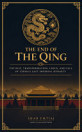
Written by the eminent sinologist Michael Loewe, and edited for publication by T. Corey Brennan and Michael Nylan, this book gives an overview of the considerations and practices of two major world empires that together ruled half of the earth's population in the first centuries BCE: ancient Rome and Han China. Approaching the historical material with a comparative perspective, Loewe examines the strengths and weaknesses, and the successes and failures, which can be seen in the organisation and government of these two political systems. Though each empire was largely ignorant of the other, the problems they faced were similar, given the rudimentary transportation and communication facilities of the time, the high mortality rates and the low levels of literacy. Yet each empire ruled its people in distinctly different ways, with the Roman empire governed largely by military officials, in contrast to the Chinese empire, whose administration was well stocked with roughly 130,000 highly trained professionals.
The ten chapters of this book set out to compare the ways that these two contemporary regimes, similar in size and population, sought to control human activities and impose a set of regulated discipline over those who were ruled. Each chapter concerns the degrees and methods of forming a united people; the assumptions that lay behind such attempts; the reliance that imperial authority placed on religious practices; legal impositions and the structure of institutions; and the bases of social cohesion and economic co-operation. The result is an engaging study of two remarkable empires, whose rise and fall are contrasted in a way that deepens our understanding of empire and civilisation.
The ten chapters of this book set out to compare the ways that these two contemporary regimes, similar in size and population, sought to control human activities and impose a set of regulated discipline over those who were ruled. Each chapter concerns the degrees and methods of forming a united people; the assumptions that lay behind such attempts; the reliance that imperial authority placed on religious practices; legal impositions and the structure of institutions; and the bases of social cohesion and economic co-operation. The result is an engaging study of two remarkable empires, whose rise and fall are contrasted in a way that deepens our understanding of empire and civilisation.
Written by the eminent sinologist Michael Loewe, and edited for publication by T. Corey Brennan and Michael Nylan, this book gives an overview of the considerations and practices of two major world empires that together ruled half of the earth's population in the first centuries BCE: ancient Rome...
Discover more
About the author
Michael Loewe is Professor Emeritus of Chinese Studies at the University of Cambridge, UK. Trained initially in Classics, he is one of the most prominent scholars of Chinese history and culture. Loewe has also served as the Director of the Needham Research Institute in Cambridge, UK, which is devoted to the study of the history of East-Asian science and technology. He is author of a dozen books on early China, and the co-editor of China's Early Empires: A Reappraisal (2010) and The Cambridge History of Ancient China (1986).
T. Corey Brennan is Professor of Classics at Rutgers University, USA. He is author of The Fasces: A History of Ancient Rome's Most Dangerous Political Symbol (2022) and Sabina Augusta: An Imperial Journey (2018). His research interests include Roman political history and the social history of classical antiquity.
Michael Nylan is Jane K. Sather Professor of History at the University of California at Berkeley, USA, and a former student of Michael Loewe. She has published numerous books and articles on early China, including The Art of War: A New Translation (2022), and The Chinese Pleasure Book (2018), as well as a forthcoming monograph with Bloomsbury on environmental history.
Michael Loewe is Professor Emeritus of Chinese Studies at the University of Cambridge, UK. Trained initially in Classics, he is one of the most prominent scholars of Chinese history and culture. Loewe has also served as the Director of the Needham Research Institute in Cambridge, UK, which is dev...
Rate this ebook
Tell us what you think.
Reading information
Smartphones and tablets
Install the Google Play Books app for Android and iPad/iPhone. It syncs automatically with your account and allows you to read online or offline wherever you are.
Laptops and computers
You can listen to audiobooks purchased on Google Play using your computer's web browser.
eReaders and other devices
To read on e-ink devices like Kobo eReaders, you'll need to download a file and transfer it to your device. Follow the detailed Help Center instructions to transfer the files to supported eReaders.