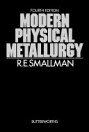
Metals and Materials: Science, Processes, Applications
thg 10 2013 · Elsevier
Sách điện tử
444
Trang
family_home
Đủ điều kiện
info
Giới thiệu về sách điện tử này
Metals and Materials: Science, Processes, Applications aims to present the science of materials in a readable and concise form that leads naturally to an explanation of the ways in which materials are processed and applied. The science of metals, or physical metallurgy, has developed naturally into the wider and more diverse discipline of materials science. The study of metals and alloys still forms a large and important part of this relatively new discipline, but it's common to find that fundamental principles and concepts of physical metallurgy can be adapted to explain the behavior of a variety of non-metallic materials. As an aid to fully study this discipline, each chapter has been supplemented with a list of specialized references. These references include images and diagrams that illustrate the subtleties of materials, such as micrographs of grain structures and fine-scale defects, phase diagrams for metals and ceramics, electron diffraction patterns revealing atomic arrangements, specific property diagrams correlating the behavior of different materials, and slip vector diagrams for deforming crystals. Throughout this book, sufficient background and theory is provided to assist students in answering questions about a large part of a typical degree course in materials science and engineering. Some sections provide a background or point of entry for postgraduate studies and courses.
Metals and Materials: Science, Processes, Applications aims to present the science of materials in a readable and concise form that leads naturally to an explanation of the ways in which materials are processed and applied. The science of metals, or physical metallurgy, has developed naturally in...
Khám phá thêm
Giới thiệu tác giả
After gaining his PhD in 1953, Professor Smallman spent five years at the Atomic Energy ResearchEstablishment at Harwell before returning to the University of Birmingham, where he became Professorof Physical Metallurgy in 1964 and Feeney Professor and Head of the Department of PhysicalMetallurgy and Science of Materials in 1969. He subsequently became Head of the amalgamatedDepartment of Metallurgy and Materials (1981), Dean of the Faculty of Science and Engineering, andthe first Dean of the newly created Engineering Faculty in 1985. For five years he wasVice-Principalof the University (1987-92).He has held visiting professorship appointments at the University of Stanford, Berkeley, Pennsylvania(USA), New SouthWales (Australia), Hong Kong and Cape Town, and has received HonoraryDoctorates from the University of Novi Sad (Yugoslavia), University ofWales and Cranfield University.His research work has been recognized by the award of the Sir George Beilby Gold Medal of theRoyal Institute of Chemistry and Institute of Metals (1969), the Rosenhain Medal of the Institute ofMetals for contributions to Physical Metallurgy (1972), the Platinum Medal, the premier medal ofthe Institute of Materials (1989), and the Acta Materialia Gold Medal (2004).Hewas elected a Fellowof the Royal Society (1986), a Fellowof the RoyalAcademy of Engineering(1990), a Foreign Associate of the United States National Academy of Engineering (2005), andappointed a Commander of the British Empire (CBE) in 1992. A former Council Member of theScience and Engineering Research Council, he has been Vice-President of the Institute of Materialsand President of the Federated European Materials Societies. Since retirement he has been academicconsultant for a number of institutions both in the UK and overseas.
After gaining his PhD in 1953, Professor Smallman spent five years at the Atomic Energy ResearchEstablishment at Harwell before returning to the University of Birmingham, where he became Professorof Physical Metallurgy in 1964 and Feeney Professor and Head of the Department of PhysicalMetallurgy ...
Xếp hạng sách điện tử này
Cho chúng tôi biết suy nghĩ của bạn.
Đọc thông tin
Điện thoại thông minh và máy tính bảng
Cài đặt ứng dụng Google Play Sách cho Android và iPad/iPhone. Ứng dụng sẽ tự động đồng bộ hóa với tài khoản của bạn và cho phép bạn đọc trực tuyến hoặc ngoại tuyến dù cho bạn ở đâu.
Máy tính xách tay và máy tính
Bạn có thể nghe các sách nói đã mua trên Google Play thông qua trình duyệt web trên máy tính.
Thiết bị đọc sách điện tử và các thiết bị khác
Để đọc trên thiết bị e-ink như máy đọc sách điện tử Kobo, bạn sẽ cần tải tệp xuống và chuyển tệp đó sang thiết bị của mình. Hãy làm theo hướng dẫn chi tiết trong Trung tâm trợ giúp để chuyển tệp sang máy đọc sách điện tử được hỗ trợ.