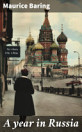
A Year in Russia: Restored Classics to Go Edition
About this ebook
Discover more
About the author
Maurice Baring was an English writer, poet, translator, and man of letters whose life was as cosmopolitan as his prose. Born into a distinguished family in 1874, he was educated at Eton and Cambridge before serving abroad as a diplomat, experiences that gave him an unusually wide view of Europe at a time of great political and cultural change. He later devoted himself to writing, producing novels, essays, plays, poetry, and criticism with remarkable elegance, wit, and versatility. Among his most admired achievements was his vivid, observant travel writing, shaped by his years in Russia and elsewhere, as well as his translations and literary essays, which showed both refinement and deep sympathy for other cultures. Baring's work often reflects themes of memory, faith, friendship, travel, and the fragile dignity of civilized life, and his clear, graceful style gives his writing a timeless charm. Though once more widely read than he is today, he remains significant for readers interested in the meeting point of literature, history, and international life in the early twentieth century. His legacy lies in his ability to combine intelligence, humor, and humane feeling, making him a rewarding writer for anyone who enjoys elegant prose, cultural observation, and a thoughtful, old-world sensibility.