About this ebook
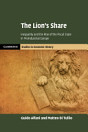
The early decades of the sixteenth century were a turbulent time for the Italian peninsula as competing centres of power struggled for political control. Nowhere was this more true than the area contested by Milan and Venice, that was constantly crossed and occupied by rival armies. Investigating the impact of successive crises upon the inhabitants of the Po Valley, this book challenges many fundamental assumptions about the relationship between war and economic development and draws conclusion that have implications for early modern Europe as a whole. In traditional historiography, periods of war and general crisis have often been regarded as promoting a shift in resources from the communal towards a small number of individuals. However, through a close micro-study of a single region, this book offers a different perspective. Rather than promoting an aggressive individualism, it is argued that in times of general crisis, social networks aimed to reproduce themselves and the original status quo by developing creative solutions and institutions favouring co-operation. Furthermore the elites could not always exploit ’local’ wealth because of the need to protect their position of leadership within the community, which required the preservation of that very community. This thesis not only challenges the received wisdom, but also fuels a new debate about the ways in which economic growth occurred in Early Modern Italy and Europe.
The early decades of the sixteenth century were a turbulent time for the Italian peninsula as competing centres of power struggled for political control. Nowhere was this more true than the area contested by Milan and Venice, that was constantly crossed and occupied by rival armies. Investigating...
Discover more
About the author
Matteo Di Tullio is a Research Fellow at Bocconi University (Milan, Italy), where he teaches economic history. He is a member of the 'Dondena' Centre for Research on Social Dynamics (Bocconi University, Milan, Italy) and an associate member of the Centre de Recherches Historiques de l’Ouest (CERHIO, Rennes 2 University, France). His principal fields of research are the history of the dynamics of the concentration and distributions of wealth, the history of the management of resources (environmental and economical) in local communities, rural history, the history of tax and finance, and demographic history in the pre-industrial era. He is co-author of a book on the budgets of the State of Milan under the French dominions of the sixteenth century (Stati di Guerra. I bilanci della Lombardia francese del primo Cinquecento, Rome: École française de Rome 2014, with L. Fois) and he is co-editor of a book on the interactions between the economy and the environment in pre-industrial Italy (Storia economica e ambiente italiano, Milan: Franco Angeli 2012, with G. Alfani and L. Mocarelli).
Matteo Di Tullio is a Research Fellow at Bocconi University (Milan, Italy), where he teaches economic history. He is a member of the 'Dondena' Centre for Research on Social Dynamics (Bocconi University, Milan, Italy) and an associate member of the Centre de Recherches Historiques de l’Ouest (CERH...
Rate this ebook
Tell us what you think.
Reading information
Smartphones and tablets
Install the Google Play Books app for Android and iPad/iPhone. It syncs automatically with your account and allows you to read online or offline wherever you are.
Laptops and computers
You can listen to audiobooks purchased on Google Play using your computer's web browser.
eReaders and other devices
To read on e-ink devices like Kobo eReaders, you'll need to download a file and transfer it to your device. Follow the detailed Help Center instructions to transfer the files to supported eReaders.