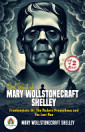
Frankenstein: or, the Modern Prometheus
Mary Wollstonecraft Shelley
Jan 1922 · Cornhill Publishing Company
star
145 reviews
Ebook
332
Pages
Tools
info
About this ebook
Ratings and reviews
145 reviews

A Google user
- Flag inappropriate
I thought the book Frankenstein was ok. Nothing in the book really "popped out at me." It was very hard to stay into the book and very difficult to read. The main theme I think was what goes around comes around, or karma. Victor had this idea to create a monster but when he did he was mortified and left it alone. He left this poor innocent creature into the cold world by itself. That to me just isn't fair or right. I think the protagonist in the book would be Frankenstein the monster. Yes, he did kill many innocent people but think about it. Victor left him alone, not knowing right from wrong, and humanity treated him very unkind. So all he knew was abandonment and violence. The monster killed people just to get back at Victor and the villagers who tried to kill him. Im not sure why, but I was definitely rooting for the monster in the book. I guess it was because the monster was this lonely and innocent creature who was being treated back so I felt bad for him. I think the message of the whole book is do unto others as you would have them do unto you. Don't expect to be mean to people and nothing bad happen to you.
A Google user
- Flag inappropriate
I liked the book because it is thought provoking. There are many themes in this book, but the main theme is responsibility. Was the monster responsible for his actions or was it Victor's responsibility to teach the monster about life? In the end though I think the hero is Victor because he hunts down the monster so it won't hurt anyone else. I think the message we can get out of the book is look at the entire picture. Victor locked everything out as he created the monster. He did not think about the consequences.
A Google user
- Flag inappropriate
What an excellent book! Mary Shelly truly had a grasp both of the English language and the human condition. Her characters were believable and caused me to feel real empathy for them. Victor's childhood and pastoral family situation drew me into his life with interest and the, at first, subtle but increasingly dramatic way in which his life fell apart before my very eyes was truly engaging. This is what Joseph Conrad meant by "the fascination with the abomination." It was horrible in every way and I hurt both for Victor and for his creation, through the reading of this book, I felt the whole spectrum of human emotion from elation to devastation but I never once could bear to look away from the horror unfolding on the pages.
As the story developed, the lines between protagonist and antagonist blurred such that, at the close of the novel, I no longer knew who to give my allegiance to. Master as she was, Shelly must have known this because in her wisdom as an author, she provided a new character for the reader to align themselves with at the end of the tale when all others we had sympathized with were gone in much the same way the sympathy of the reader shifts from the man to his dog in reading "To Build a Fire."
Overall, the message of "Frankenstein" seems to be that the passions and desires of mankind are wonderful and powerful things as long as they are kept within proper boundaries. When Victor's love for science superseded his love for his family and his love for decency, it became his downfall. This is not to say that his love for science was an error, only that the way in which he loved it was faulty. The same would have been true of Robert Walton had Victor not intervened in his situation. His love of discovery and exploration was surpassing his love for the safety of his men. Victor recognized this and pointed out this danger to Robert (us?) before it was too late. The tragedy of the life of Victor Frankenstein is a monument to the potential of the human will, for good or ill. The question is, will we heed his warning in this age of ever-increasing technological power or will we follow him down the path of obsession and eventual destruction?
Rate this ebook
Tell us what you think.
Reading information
Smartphones and tablets
Install the Google Play Books app for Android and iPad/iPhone. It syncs automatically with your account and allows you to read online or offline wherever you are.
Laptops and computers
You can listen to audiobooks purchased on Google Play using your computer's web browser.
eReaders and other devices
To read on e-ink devices like Kobo eReaders, you'll need to download a file and transfer it to your device. Follow the detailed Help Center instructions to transfer the files to supported eReaders.