About this ebook
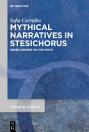
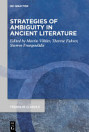
Ambiguity in the sense of two or more possible meanings is considered to be a distinctive feature of modern art and literature. It characterizes the "open artwork" (Eco) and is generated by "disruptive tactics" (Wellershoff) and strategies to engender uncertainty. While ambiguity is seen as a "paradigm of modernity" (Bode), there is skepticism regarding its use in the pre-modern era. Older studies were dominated by the conviction that there was a lack of ambiguity in pre-modernity because, according to the rules of the "old rhetoric", ambiguity was seen as an avoidable error (vitium) and a violation of the dictate of clarity (perspicuitas).
The aim of the volume is to re-examine the putative "absence of ambiguity" in the pre-modern era. Is it not possible to find clear examples of deliberately employed (intended) ambiguity in antiquity? Are the oracles and riddles, the Palinode of Stesichoros and Socrates (Phaedrus), the dissoi logoi of rhetoric, the ambiguities of the tragedies all exceptions or do they not indicate a distinct interest in the artistic use of ambiguity?
The presentations of the conference, which will include scholars from various philologies, will combine a recourse to theoretical concepts of intended ambiguity with exemplary analyses from the field of pre-modern art and literature.
Ambiguity in the sense of two or more possible meanings is considered to be a distinctive feature of modern art and literature. It characterizes the "open artwork" (Eco) and is generated by "disruptive tactics" (Wellershoff) and strategies to engender uncertainty. While ambiguity is seen as a "pa...
Discover more
About the author
M. Vöhler and S. Frangoulidis, Aristotle University of Thessaloniki, Greece; T. Fuhrer, Ludwig-Maximilians-Universität Munich, Germany.
M. Vöhler and S. Frangoulidis, Aristotle University of Thessaloniki, Greece; T. Fuhrer, Ludwig-Maximilians-Universität Munich, Germany.
Rate this ebook
Tell us what you think.
Reading information
Smartphones and tablets
Install the Google Play Books app for Android and iPad/iPhone. It syncs automatically with your account and allows you to read online or offline wherever you are.
Laptops and computers
You can listen to audiobooks purchased on Google Play using your computer's web browser.
eReaders and other devices
To read on e-ink devices like Kobo eReaders, you'll need to download a file and transfer it to your device. Follow the detailed Help Center instructions to transfer the files to supported eReaders.