About this ebook
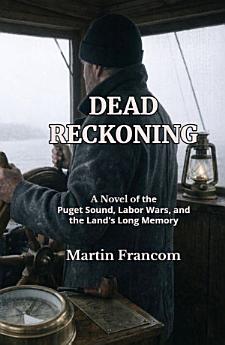
The Sound keeps its secrets in cold water and deep channels. So does Einar Voss.
A former Pinkerton operative running freight on the aging Kviksølv steamer, Einar has spent three years navigating the silence between who he was and what he did on the Everett docks in 1916 — the moment he let a man live who he was paid to destroy.
Now a ledger has surfaced. Names, payments, a paper trail leading to the planned destruction of a labor hall in Centralia, Washington. Armistice Day, 1919. Eleven days away.
To move the evidence through waters his former employer controls, Einar will need everything the Sound has taught him — and everything his navigator, Thomas Sqwahl, has been quietly teaching him for three years about water, memory, and what the land remembers long after men have finished arguing over it.
Some reckonings take years to complete.
Discover more
Ratings and reviews
About the author
Martin E. Francom’s life has been fueled by a secret passion for tales that challenge and illuminate. A retired pharmacist and programmer who spent decades chasing prescriptions and code, Martin eventually closed those chapters to travel a new road—one dedicated to exploring the values he holds dear: the search for patterns in chaos, the preservation of wisdom across generations, and the tension between witnessing and intervening in history's great turnings.
Finding a home with the Kitsap Literary Arts and Writers Guild (KLAW) helped transform his scattered ideas into published narratives. While his sprawling 300-year saga, Stewards of the Fourth Turning, explores the cyclical nature of history and forbidden knowledge, his imagination refuses to stay in one lane. His works now span genres from Southern Gothic Noir in Blood on the Dogwood to the local historical fiction of The Vikings of Liberty Bay and the steampunk adventures found in The Tunguska Incident.
Martin resides in Washington State, where he continues to create stories to entertain his grandchildren, whose curiosity keeps him honest.