About this ebook
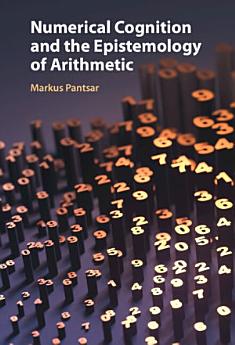
Arithmetic is one of the foundations of our educational systems, but what exactly is it? Numbers are everywhere in our modern societies, but what is our knowledge of numbers really about? This book provides a philosophical account of arithmetical knowledge that is based on the state-of-the-art empirical studies of numerical cognition. It explains how humans have developed arithmetic from humble origins to its modern status as an almost universally possessed knowledge and skill. Central to the account is the realisation that, while arithmetic is a human creation, the development of arithmetic is constrained by our evolutionarily developed cognitive architecture. Arithmetic is a sophisticated cultural development, but it is ultimately based on abilities with numerosities that we already possess as infants and share with many non-human animals. Therefore, arithmetic is not purely conventional, an arbitrary game akin to chess. Instead, arithmetic is deeply connected to our basic cognitive capacities.
Arithmetic is one of the foundations of our educational systems, but what exactly is it? Numbers are everywhere in our modern societies, but what is our knowledge of numbers really about? This book provides a philosophical account of arithmetical knowledge that is based on the state-of-the-art em...
Discover more
About the author
Markus Pantsar is a Visiting Professor at the RWTH Aachen University, Germany, and Docent in theoretical philosophy at the University of Helsinki, Finland. He is the author of Truth, Proof, and Gödelian Arguments: A Defence of Tarskian Truth in Mathematics (2009), and many journal articles on the cognitive foundations of arithmetical knowledge.
Markus Pantsar is a Visiting Professor at the RWTH Aachen University, Germany, and Docent in theoretical philosophy at the University of Helsinki, Finland. He is the author of Truth, Proof, and Gödelian Arguments: A Defence of Tarskian Truth in Mathematics (2009), and many journal articles on the...
Rate this ebook
Tell us what you think.
Reading information
Smartphones and tablets
Install the Google Play Books app for Android and iPad/iPhone. It syncs automatically with your account and allows you to read online or offline wherever you are.
Laptops and computers
You can listen to audiobooks purchased on Google Play using your computer's web browser.
eReaders and other devices
To read on e-ink devices like Kobo eReaders, you'll need to download a file and transfer it to your device. Follow the detailed Help Center instructions to transfer the files to supported eReaders.


