About this ebook
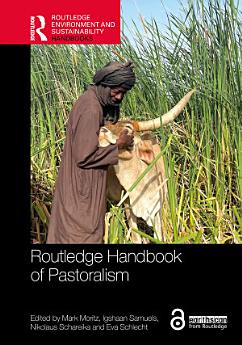
Approaching pastoralism as a social-ecological system, this volume synthesizes current knowledge about how pastoralists make a living and organize social life while managing herds in diverse and often highly variable environments. Understanding pastoralism in this holistic way requires an approach that bridges disciplines: not only anthropology but also rangeland ecology, animal science, agricultural economics, veterinary epidemiology, and related fields. This handbook’s chapters are organized into eight parts that examine the emergence of pastoralism; its biophysical foundations; the economics of pastoral production; adaptive strategies; social and political organization; new methodological and analytical approaches; development and policy perspectives; and possible futures for pastoral systems. Together, these contributions advance the field by offering both a state-of-the-art guide and a source of inspiration for future research. This volume is designed to serve as a reference for scholars seeking to launch innovative, impactful studies, as well as for policymakers and practitioners working to design effective interventions that support pastoral livelihoods.
This handbook is an indispensable resource on pastoralism for students, researchers, and professionals.
Chapters 1, 3, 7, 10, 13, 17, 28 of this book is freely available as a downloadable Open Access PDF at http://www.taylorfrancis.com under a Creative Commons Attribution-Non Commercial-No Derivatives (CC BY-NC-ND) 4.0 license.
Discover more
About the author
Mark Moritz is Professor of Anthropology at Ohio State University, USA. He has conducted research on pastoral systems in Central Africa and Southern Arabia, using a combination of ethnographic methods, spatial analyses, comparative analyses, and agent-based modeling to explore questions about common-pool resources, the ecology of infectious diseases, and economic transformations.
Igshaan Samuels is a specialist researcher in Range and Forage Sciences at the Agricultural Research Council in South Africa. He is the Global Co-chair of the Global Alliance for the United Nations-declared International Year of Rangelands and Pastoralists in 2026.
Nikolaus Schareika is a Professor of Anthropology at the University of Göttingen, Germany. He has extensively worked in pastoral societies, particularly in groups of Woɗaaɓe and Fulani people in West Africa.
Eva Schlecht chairs the joint section Animal Husbandry in the Tropics and Subtropics at the Universities of Kassel and Göttingen, Germany. With over 30 years of research across Africa, Asia, and the Near East, she examines livestock–environment interactions, related ecosystem services, and how animal husbandry supports livelihoods and food security.