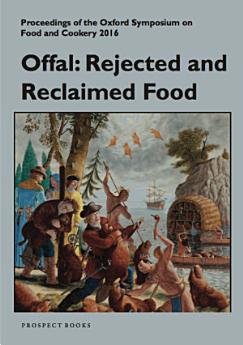
Offal: Rejected and Reclaimed Food: Proceedings of the 2016 Oxford Symposium on Food and Cookery
Mark McWilliams
Jun 2017 · Oxford Symposium
Ebook
400
Pages
family_home
Eligible
info
About this ebook
This year's theme - offal, rejected and reclaimed foods - when taken in the broadest sense is a subject well-suited to the explorative ethos of the Oxford Symposium, not least because there's no universal agreement on what actually qualifies as offal. Each culture has its own views on whether foods are acceptable or merit rejection. Even in neighbouring countries, differences run deep. For example, English 'offal' is linguistically related to the Dutch word 'afval' which means unambiguously 'garbage', a designation that includes most animal-intestines and extremities. The negative connotation of the word indicates automatic rejection of offal by the native Dutch. Nevertheless, within the nation, differences can be observed. In modern times, consumption of most varieties of organ-meats, traditionally unusual in The Netherlands, is having a come-back thanks to newcomers from all parts of the world. Goatheads, chickens-feet, blood, liver, testicles, stomach, udder and heart, are all available if you know the right butcher.
This year's theme - offal, rejected and reclaimed foods - when taken in the broadest sense is a subject well-suited to the explorative ethos of the Oxford Symposium, not least because there's no universal agreement on what actually qualifies as offal. Each culture has its own views on whether foo...
Discover more
About the author
Professor Mark McWilliams teaches in the English Department of the United States Naval Academy.
Professor Mark McWilliams teaches in the English Department of the United States Naval Academy.
Rate this ebook
Tell us what you think.
Reading information
Smartphones and tablets
Install the Google Play Books app for Android and iPad/iPhone. It syncs automatically with your account and allows you to read online or offline wherever you are.
Laptops and computers
You can listen to audiobooks purchased on Google Play using your computer's web browser.
eReaders and other devices
To read on e-ink devices like Kobo eReaders, you'll need to download a file and transfer it to your device. Follow the detailed Help Center instructions to transfer the files to supported eReaders.