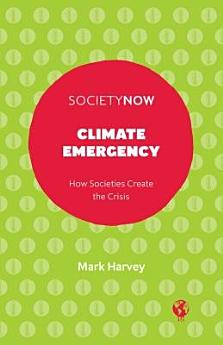
Climate Emergency: How Societies Create the Crisis
Jul 2021 · Emerald Group Publishing
Ebook
256
Pages
Tools
info
family_home
Eligible
info
About this ebook
The recognition that climate change is now a climate emergency has been endorsed by a wide range of scientists and the United Nations. Natural scientists focus on the aggregate impacts of human activity resulting from burning fossil fuels and producing food, and hence speak of anthropogenic climate change. Climate Emergency analyses the socio-economic and political forces driving the climate emergency, developing the complementary concept of 'sociogenic climate change' to show how societies both create the crisis and are challenged by it in different ways. Harvey demonstrates how societies inhabit different resource environments, whether for fossil fuel reserves, or for land, sun, and water, differences which condition their histories and cultures.
In introducing the sociogenic approach to climate change, Harvey re-examines history through the lens of climate change, re-writing the climate impact of the British industrial revolution; US settler colonialism; slavery and Native American genocides; the electrification of societies and infrastructures for fossil-fuelled transportation; and changes in our eating habits. In the big historical picture, different societies and political economies have both created an unequal world and so continue to make an unequal contribution to climate change. This can only be understood by showing how societies have come to distinctively exploit planetary resources in different ways. Societies create the crisis and have to be politically involved in addressing the crisis.
In introducing the sociogenic approach to climate change, Harvey re-examines history through the lens of climate change, re-writing the climate impact of the British industrial revolution; US settler colonialism; slavery and Native American genocides; the electrification of societies and infrastructures for fossil-fuelled transportation; and changes in our eating habits. In the big historical picture, different societies and political economies have both created an unequal world and so continue to make an unequal contribution to climate change. This can only be understood by showing how societies have come to distinctively exploit planetary resources in different ways. Societies create the crisis and have to be politically involved in addressing the crisis.
The recognition that climate change is now a climate emergency has been endorsed by a wide range of scientists and the United Nations. Natural scientists focus on the aggregate impacts of human activity resulting from burning fossil fuels and producing food, and hence speak of anthropogenic clima...
Discover more
About the author
Mark Harvey is Emeritus Professor of Sociology at the University of Essex. He has developed a comparative and historical approach to economic sociology across many fields, undertaking primary research in Europe, Latin America, China, India and the USA.
Mark Harvey is Emeritus Professor of Sociology at the University of Essex. He has developed a comparative and historical approach to economic sociology across many fields, undertaking primary research in Europe, Latin America, China, India and the USA.
Rate this ebook
Tell us what you think.
Reading information
Smartphones and tablets
Install the Google Play Books app for Android and iPad/iPhone. It syncs automatically with your account and allows you to read online or offline wherever you are.
Laptops and computers
You can listen to audiobooks purchased on Google Play using your computer's web browser.
eReaders and other devices
To read on e-ink devices like Kobo eReaders, you'll need to download a file and transfer it to your device. Follow the detailed Help Center instructions to transfer the files to supported eReaders.