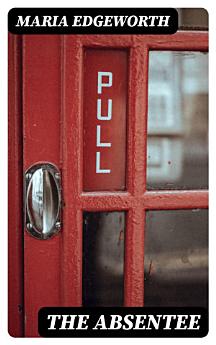
The Absentee
Maria Edgeworth
Sep 2022 · DigiCat
Ebook
277
Pages
family_home
Eligible
info
About this ebook
Maria Edgeworth's "The Absentee" masterfully explores the intricate dynamics of landownership and absenteeism in early 19th-century Ireland, intertwining social critique with vibrant character development. Through its sharp wit and keen observational style, the novel navigates the consequences of neglect by the gentry, as it juxtaposes the lives of the wealthy aristocrats with the struggles of their tenants. Edgeworth employs a blend of perceptive dialogue and satirical commentary to critique the social injustices of her time, foregrounding the pressing dilemmas of identity, belonging, and societal responsibility, all set against the backdrop of Ireland's turbulent cultural landscape. As a prominent figure in the transition from Romanticism to Victorian literature, Maria Edgeworth drew upon her own experiences as a member of the Anglo-Irish gentry, which profoundly influenced her narrative choices. Her deep understanding of the socio-political fabric of Irish society, particularly the tensions between landlords and tenants, allowed her to portray these dynamics with authenticity and depth. Edgeworth's engagement with educational reform and her advocacy for Irish nationalism further illuminate the ethical themes embedded in her work, showcasing her commitment to moral and social improvement. "The Absentee" is essential for readers interested in the complexities of Irish literature and the historical context of social responsibility. It offers invaluable insights into the era's socio-economic challenges while remaining engaging and thought-provoking. Edgeworth's deft handling of characters and societal critique makes this novel a seminal read for anyone seeking to understand the nuances of Irish identity and the ramifications of absenteeism.
Maria Edgeworth's "The Absentee" masterfully explores the intricate dynamics of landownership and absenteeism in early 19th-century Ireland, intertwining social critique with vibrant character development. Through its sharp wit and keen observational style, the novel navigates the consequences of...
Discover more
About the author
Maria Edgeworth (1768-1849) was a prolific Anglo-Irish writer of adults' and children's literature. She was one of the earliest realist writers in children's literature and a significant figure in the development of the novel in Europe. Edgeworth's work often engaged with the issues of her day, such as education, gender roles, politics, and race. Born on January 1, 1768, in Black Bourton, Oxfordshire to an Anglo-Irish family, she was the second child of Richard Lovell Edgeworth, a well-known inventor and writer, and Anna Maria Edgeworth. Maria was raised on the family estate at Edgeworthstown, County Longford, Ireland, where much of her writing would later be influenced by the rural Irish society she observed closely. Her schooling was irregular, but she was tutored in law, Irish economics, and literature by her father, who encouraged her literary talents. One of her most notable works is 'Castle Rackrent' (1800), a satire on Anglo-Irish landlords, which established her as a pioneer of the historical novel that influenced the likes of Sir Walter Scott. The novel 'The Absentee' (1812), a part of her series of 'Tales of Fashionable Life,' is a commentary on Irish absentee landlords and their exploitative relationship with their tenants, showcasing her keen understanding of the socio-political dynamics of her time. Edgeworth's works often advanced the cause of Irish national character and exposed the problems caused by the displacement of the local populace by their landlords. Her other works include 'Belinda' (1801), a novel that challenges the traditional views of women's roles, and 'Moral Tales' (1801), meant for the education of young minds. Edgeworth maintained a prolific correspondence with other literary figures and her family, which has also provided significant insight into the society in which she lived.
Maria Edgeworth (1768-1849) was a prolific Anglo-Irish writer of adults' and children's literature. She was one of the earliest realist writers in children's literature and a significant figure in the development of the novel in Europe. Edgeworth's work often engaged with the issues of her day, s...
Rate this ebook
Tell us what you think.
Reading information
Smartphones and tablets
Install the Google Play Books app for Android and iPad/iPhone. It syncs automatically with your account and allows you to read online or offline wherever you are.
Laptops and computers
You can listen to audiobooks purchased on Google Play using your computer's web browser.
eReaders and other devices
To read on e-ink devices like Kobo eReaders, you'll need to download a file and transfer it to your device. Follow the detailed Help Center instructions to transfer the files to supported eReaders.