About this ebook
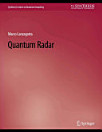
In this text we present a technical overview of the emerging field of quantum computation along with new research results by the authors. What distinguishes our presentation from that of others is our focus on the relationship between quantum computation and computer science. Specifically, our emphasis is on the computational model of quantum computingrather than on the engineering issues associated with its physical implementation. We adopt this approach for the same reason that a book on computer programming doesn't cover the theory and physical realization of semiconductors. Another distinguishing feature of this text is our detailed discussion of the circuit complexity of quantum algorithms. To the extent possible we have presented the material in a form that is accessible to the computer scientist, but in many cases we retain the conventional physics notation so that the reader will also be able to consult the relevant quantum computing literature. Although we expect the reader tohave a solid understanding of linear algebra, we do not assume a background in physics. This text is based on lectures given as short courses and invited presentations around the world, and it has been used as the primary text for a graduatecourse at George Mason University. In all these cases our challenge has been the same: how to present to a generalaudience a concise introduction to the algorithmic structure and applications of quantum computing on an extremely short period of time. The feedback from these courses and presentations has greatly aided in making our exposition of challenging concepts more accessible to a general audience. Table of Contents: Introduction / The Algorithmic Structure of Quantum Computing / Advantages and Limitations of Quantum Computing / Amplitude Amplification / Case Study: Computational Geometry / The Quantum Fourier Transform / Case Study: The Hidden Subgroup / Circuit Complexity Analysis of Quantum Algorithms / Conclusions / Bibliography
In this text we present a technical overview of the emerging field of quantum computation along with new research results by the authors. What distinguishes our presentation from that of others is our focus on the relationship between quantum computation and computer science. Specifically, our em...
Discover more
About the author
Dr. Marco Lanzagorta is Technical Fellow and Director of the Quantum Technologies Group of ITT Corporation. In addition, Dr. Lanzagorta is an Affiliate Associate Professor at George Mason University and co-editor of the Synthesis Lectures on Quantum Computing published by Morgan & Claypool. Dr. Lanzagorta received a PhD in theoretical physics from Oxford University and in the past he worked at the US Naval Research Laboratory, the European Organization for Nuclear Research (CERN) in Switzerland, and the International Center for Theoretical Physics (ICTP) in Italy. Dr. Uhlmann is a leading researcher in the theory of stochastic tracking and control. He is currently a professor at the University of Missouri-Columbia after working for 12 years at the Naval Research Laboratory in Washington, DC. He has a bachelors degree in philosophy, a masters in computer science, and a doctorate in robotics from the University of Oxford in England. Dr. Uhlmann is also a scholar of cult and B-movies, especially of the lucha and kaiju genres.
Dr. Marco Lanzagorta is Technical Fellow and Director of the Quantum Technologies Group of ITT Corporation. In addition, Dr. Lanzagorta is an Affiliate Associate Professor at George Mason University and co-editor of the Synthesis Lectures on Quantum Computing published by Morgan & Claypool. Dr. L...
Rate this ebook
Tell us what you think.
Reading information
Smartphones and tablets
Install the Google Play Books app for Android and iPad/iPhone. It syncs automatically with your account and allows you to read online or offline wherever you are.
Laptops and computers
You can listen to audiobooks purchased on Google Play using your computer's web browser.
eReaders and other devices
To read on e-ink devices like Kobo eReaders, you'll need to download a file and transfer it to your device. Follow the detailed Help Center instructions to transfer the files to supported eReaders.