Management

· 20th Century Korean Literature · Literature Translation Institute of Korea
21 recensioner
E-bok
87
Sidor
Verktyg

Om den här e-boken

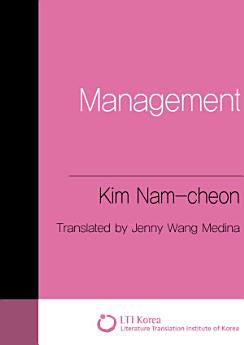
 “Management,” published in January 1940 in the literary magazine Munjang, is often used as an example of the “conversion novel.” It takes place in the late 1930s during the period of Japanese military rule, and expresses the deep sense of oppression felt by intellectuals who were forced to recant their political beliefs to the colonial government. The story depicts the everyday lives of Oh Si-hyeong, a former Marxist in the process of conversion, and his girlfriend Choi Mu-gyeong as she works to get him released from prison. When Si-hyeong is released, the couple must deal with their changed realities and the circumstances of the time.
“Management,” published in January 1940 in the literary magazine Munjang, is often used as an example of the “conversion novel.” It takes place in the late 1930s during the period of Japanese military rule, and expresses the deep sense of oppression felt by intellectuals who were forced to recan...

Upptäck mer

Betyg och recensioner

21 recensioner

Om författaren

Kim Nam-cheon (1911-1953) was a prominent colonial period author and critic born in Seongcheon, Pyeongnam Province in 1911. His given name was Hyo-sik, but he is better known by his literary name, Nam-cheon. After graduating from Pyongyang High School in 1929, he attended Hosei University in Tokyo where he became a member of the socialist writers group KAPF (Korea Artista Proleta Federatio).

In 1930, Kim began his writing career with a critical piece titled “A Reexamination of the Beginnings of the Film Movement.” Together with Korean writer Im Hwa, he advocated a Bolshevik Literary Movement and wrote the social issue novels Factory Newspaper (1931) and Factory Workers Association (1932), even participating in a strike at a rubber factory in Pyongyang.

Some of his most representative works include the historical novel Great Currents (1939) and the short stories “After Beating Your Wife…” (1937), “Management” (1940), and “Barley” (1941). Many of Kim’s early works reflect his Marxist perspective and progressive writing style, but his works from the later years of the colonial period are marked by the anguish many intellectuals felt about the experience of forced political conversion under Japanese Imperialism. Immediately after liberation, Kim Nam-cheon worked with Im Hwa for the “Joseon Writers Alliance.” Kim, Im Hwa, and Park Heon-yeong are thought to have been executed in North Korea during a purge of intellectuals in 1953.

Kim Nam-cheon (1911-1953) was a prominent colonial period author and critic born in Seongcheon, Pyeongnam Province in 1911. His given name was Hyo-sik, but he is better known by his literary name, Nam-cheon. After graduating from Pyongyang High School in 1929, he attended Hosei University in Toky...

Betygsätt e-boken

Berätta vad du tycker.

Läsinformation

Smartphones och surfplattor
Installera appen Google Play Böcker för Android och iPad/iPhone. Appen synkroniseras automatiskt med ditt konto så att du kan läsa online eller offline var du än befinner dig.
Laptops och stationära datorer
Du kan lyssna på ljudböcker som du har köpt på Google Play via webbläsaren på datorn.
Läsplattor och andra enheter
Om du vill läsa boken på enheter med e-bläck, till exempel Kobo-läsplattor, måste du ladda ned en fil och överföra den till enheten. Följ anvisningarna i hjälpcentret om du vill överföra filerna till en kompatibel läsplatta.