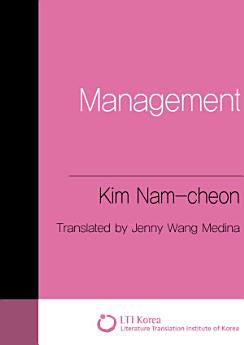
Management

· 20th Century Korean Literature · Literature Translation Institute of Korea
21 пікір
Электрондық кітап
87
бет
Құралдар

Осы электрондық кітап туралы ақпарат

 “Management,” published in January 1940 in the literary magazine Munjang, is often used as an example of the “conversion novel.” It takes place in the late 1930s during the period of Japanese military rule, and expresses the deep sense of oppression felt by intellectuals who were forced to recant their political beliefs to the colonial government. The story depicts the everyday lives of Oh Si-hyeong, a former Marxist in the process of conversion, and his girlfriend Choi Mu-gyeong as she works to get him released from prison. When Si-hyeong is released, the couple must deal with their changed realities and the circumstances of the time.
“Management,” published in January 1940 in the literary magazine Munjang, is often used as an example of the “conversion novel.” It takes place in the late 1930s during the period of Japanese military rule, and expresses the deep sense of oppression felt by intellectuals who were forced to recan...

Ұқсас кітаптар

Бағалар мен пікірлер

21 пікір

Авторы туралы

Kim Nam-cheon (1911-1953) was a prominent colonial period author and critic born in Seongcheon, Pyeongnam Province in 1911. His given name was Hyo-sik, but he is better known by his literary name, Nam-cheon. After graduating from Pyongyang High School in 1929, he attended Hosei University in Tokyo where he became a member of the socialist writers group KAPF (Korea Artista Proleta Federatio).

In 1930, Kim began his writing career with a critical piece titled “A Reexamination of the Beginnings of the Film Movement.” Together with Korean writer Im Hwa, he advocated a Bolshevik Literary Movement and wrote the social issue novels Factory Newspaper (1931) and Factory Workers Association (1932), even participating in a strike at a rubber factory in Pyongyang.

Some of his most representative works include the historical novel Great Currents (1939) and the short stories “After Beating Your Wife…” (1937), “Management” (1940), and “Barley” (1941). Many of Kim’s early works reflect his Marxist perspective and progressive writing style, but his works from the later years of the colonial period are marked by the anguish many intellectuals felt about the experience of forced political conversion under Japanese Imperialism. Immediately after liberation, Kim Nam-cheon worked with Im Hwa for the “Joseon Writers Alliance.” Kim, Im Hwa, and Park Heon-yeong are thought to have been executed in North Korea during a purge of intellectuals in 1953.

Kim Nam-cheon (1911-1953) was a prominent colonial period author and critic born in Seongcheon, Pyeongnam Province in 1911. His given name was Hyo-sik, but he is better known by his literary name, Nam-cheon. After graduating from Pyongyang High School in 1929, he attended Hosei University in Toky...

Осы электрондық кітапты бағалаңыз.

Пікіріңізбен бөлісіңіз.

Ақпаратты оқу

Смартфондар мен планшеттер
Android және iPad/iPhone үшін Google Play Books қолданбасын орнатыңыз. Ол аккаунтпен автоматты түрде синхрондалады және қайда болсаңыз да, онлайн не офлайн режимде оқуға мүмкіндік береді.
Ноутбуктар мен компьютерлер
Google Play дүкенінде сатып алған аудиокітаптарды компьютердің браузерінде тыңдауыңызға болады.
eReader және басқа құрылғылар
Kobo eReader сияқты E-ink технологиясымен жұмыс істейтін құрылғылардан оқу үшін файлды жүктеп, оны құрылғыға жіберу керек. Қолдау көрсетілетін eReader құрылғысына файл жіберу үшін Анықтама орталығының нұсқауларын орындаңыз.