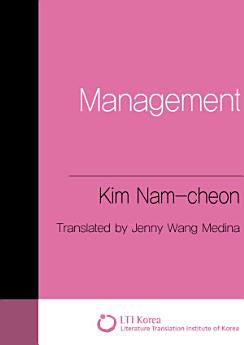
Management

· 20th Century Korean Literature · Literature Translation Institute of Korea
21 rəy
E-kitab
87
Səhifələr
Alətlər

Bu e-kitab haqqında

 “Management,” published in January 1940 in the literary magazine Munjang, is often used as an example of the “conversion novel.” It takes place in the late 1930s during the period of Japanese military rule, and expresses the deep sense of oppression felt by intellectuals who were forced to recant their political beliefs to the colonial government. The story depicts the everyday lives of Oh Si-hyeong, a former Marxist in the process of conversion, and his girlfriend Choi Mu-gyeong as she works to get him released from prison. When Si-hyeong is released, the couple must deal with their changed realities and the circumstances of the time.
“Management,” published in January 1940 in the literary magazine Munjang, is often used as an example of the “conversion novel.” It takes place in the late 1930s during the period of Japanese military rule, and expresses the deep sense of oppression felt by intellectuals who were forced to recan...

Kəşfə davam edin

Reytinqlər və rəylər

21 rəy

Müəllif haqqında

Kim Nam-cheon (1911-1953) was a prominent colonial period author and critic born in Seongcheon, Pyeongnam Province in 1911. His given name was Hyo-sik, but he is better known by his literary name, Nam-cheon. After graduating from Pyongyang High School in 1929, he attended Hosei University in Tokyo where he became a member of the socialist writers group KAPF (Korea Artista Proleta Federatio).

In 1930, Kim began his writing career with a critical piece titled “A Reexamination of the Beginnings of the Film Movement.” Together with Korean writer Im Hwa, he advocated a Bolshevik Literary Movement and wrote the social issue novels Factory Newspaper (1931) and Factory Workers Association (1932), even participating in a strike at a rubber factory in Pyongyang.

Some of his most representative works include the historical novel Great Currents (1939) and the short stories “After Beating Your Wife…” (1937), “Management” (1940), and “Barley” (1941). Many of Kim’s early works reflect his Marxist perspective and progressive writing style, but his works from the later years of the colonial period are marked by the anguish many intellectuals felt about the experience of forced political conversion under Japanese Imperialism. Immediately after liberation, Kim Nam-cheon worked with Im Hwa for the “Joseon Writers Alliance.” Kim, Im Hwa, and Park Heon-yeong are thought to have been executed in North Korea during a purge of intellectuals in 1953.

Kim Nam-cheon (1911-1953) was a prominent colonial period author and critic born in Seongcheon, Pyeongnam Province in 1911. His given name was Hyo-sik, but he is better known by his literary name, Nam-cheon. After graduating from Pyongyang High School in 1929, he attended Hosei University in Toky...

Bu e-kitabı qiymətləndirin

Fikirlərinizi bizə deyin

Məlumat oxunur

Smartfonlar və planşetlər
Android və iPad/iPhone üçün Google Play Kitablar tətbiqini quraşdırın. Bu hesabınızla avtomatik sinxronlaşır və harada olmağınızdan asılı olmayaraq onlayn və oflayn rejimdə oxumanıza imkan yaradır.
Noutbuklar və kompüterlər
Kompüterinizin veb brauzerini istifadə etməklə Google Play'də alınmış audio kitabları dinləyə bilərsiniz.
eReader'lər və digər cihazlar
Kobo eReaders kimi e-mürəkkəb cihazlarında oxumaq üçün faylı endirməli və onu cihazınıza köçürməlisiniz. Faylları dəstəklənən eReader'lərə köçürmək üçün ətraflı Yardım Mərkəzi təlimatlarını izləyin.