The Book of Shells: A Life-Size Guide to Identifying and Classifying Six Hundred Seashells
Dec 2014 · University of Chicago Press
Ebook
659
Pages
family_home
Eligible
info
About this ebook
Who among us hasn't marveled at the diversity and beauty of shells? Or picked one up, held it to our ear, and then gazed in wonder at its shape and hue? Many a lifelong shell collector has cut teeth (and toes) on the beaches of the Jersey Shore, the Outer Banks, or the coasts of Sanibel Island. Some have even dived to the depths of the ocean. But most of us are not familiar with the biological origin of shells, their role in explaining evolutionary history, and the incredible variety of forms in which they come.
Shells are the external skeletons of mollusks, an ancient and diverse phylum of invertebrates that are in the earliest fossil record of multicellular life over 500 million years ago. There are over 100,000 kinds of recorded mollusks, and some estimate that there are over a million more that have yet to be discovered. Some breathe air, others live in fresh water, but most live in the ocean. They range in size from a grain of sand to a beach ball and in weight from a few grams to several hundred pounds. And in this lavishly illustrated volume, they finally get their full due.
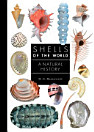
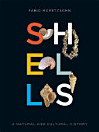
The Book of Shells offers a visually stunning and scientifically engaging guide to six hundred of the most intriguing mollusk shells, each chosen to convey the range of shapes and sizes that occur across a range of species. Each shell is reproduced here at its actual size, in full color, and is accompanied by an explanation of the shell's range, distribution, abundance, habitat, and operculum—the piece that protects the mollusk when it's in the shell. Brief scientific and historical accounts of each shell and related species include fun-filled facts and anecdotes that broaden its portrait.
The Matchless Cone, for instance, or Conus cedonulli, was one of the rarest shells collected during the eighteenth century. So much so, in fact, that a specimen in 1796 was sold for more than six times as much as a painting by Vermeer at the same auction. But since the advent of scuba diving, this shell has become far more accessible to collectors—though not without certain risks. Some species of Conus produce venom that has caused more than thirty known human deaths.
The Zebra Nerite, the Heart Cockle, the Indian Babylon, the Junonia, the Atlantic Thorny Oyster—shells from habitats spanning the poles and the tropics, from the highest mountains to the ocean's deepest recesses, are all on display in this definitive work.
Who among us hasn't marveled at the diversity and beauty of shells? Or picked one up, held it to our ear, and then gazed in wonder at its shape and hue? Many a lifelong shell collector has cut teeth (and toes) on the beaches of the Jersey Shore, the Outer Banks, or the coasts of Sanibel Island. S...
Discover more
About the author
M. G. Harasewych is research zoologist and curator of marine mollusks at the Department of Invertebrate Zoology at the Smithsonian Institution in Washington, D.C., which houses one of the world's largest mollusk collections. He has discovered and described dozens of new genera and species, written widely for scientific journals and periodicals, and is the author of Shells: Jewels from the Sea. Fabio Moretzsohn has a doctorate in zoology and is a researcher for the Harte Research Institute in Texas. He has discovered a few new species of mollusks and is a coauthor of the Encyclopedia of Texas Seashells.
M. G. Harasewych is research zoologist and curator of marine mollusks at the Department of Invertebrate Zoology at the Smithsonian Institution in Washington, D.C., which houses one of the world's largest mollusk collections. He has discovered and described dozens of new genera and species, writte...
Rate this ebook
Tell us what you think.
Reading information
Smartphones and tablets
Install the Google Play Books app for Android and iPad/iPhone. It syncs automatically with your account and allows you to read online or offline wherever you are.
Laptops and computers
You can listen to audiobooks purchased on Google Play using your computer's web browser.
eReaders and other devices
To read on e-ink devices like Kobo eReaders, you'll need to download a file and transfer it to your device. Follow the detailed Help Center instructions to transfer the files to supported eReaders.