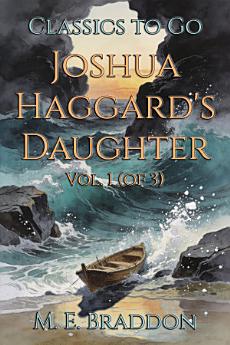
Joshua Haggard's Daughter: Restored Classics to Go Edition
About this ebook
Discover more
About the author
M. E. Braddon, born Mary Elizabeth Braddon in London in 1835, rose from a modest background to become one of the most popular and commercially successful writers of the Victorian age. Before her literary fame fully took hold, she worked as an actress and supported herself through writing, experiences that gave her a sharp eye for performance, social masks, and the pressures faced by women trying to make their own way. Braddon published prolifically across novels, short fiction, and journalism, and she became especially celebrated for her skill in suspenseful plotting, psychological tension, and vivid depictions of domestic life shadowed by secrets, crime, inheritance disputes, and moral uncertainty. Her fiction helped define the sensation novel, a form that exposed the instability beneath respectable society and gave readers both thrilling entertainment and a critique of class, gender, and power. What makes her work still feel fresh is her interest in women's constrained choices, the costs of respectability, and the uneasy gap between public appearance and private truth, themes that remain deeply recognizable today. Braddon's legacy lies not only in her enormous popularity but in the way she broadened the possibilities of popular fiction, proving that commercial success and social insight could coexist. Modern readers continue to value her for her pace, wit, and emotional intelligence, and she is especially rewarding for anyone who enjoys Victorian fiction, atmospheric mysteries, and stories that combine melodrama with a keen understanding of human motives.