About this ebook
Jiang Qin has just pulled off something dangerous. In a government conference room full of Linchuan's elite entrepreneurs—men with beer bellies, party badges, and decades of skepticism—he proposed the impossible: Linchuang Bang. A local alliance built not on old money, but on circulation, traffic, and the terrifying gamble that Zhihu can turn a city of miners into a national brand.
But the real threat isn't the meeting. It's what happens after.
A novel appears on the Zhihu forum. Five chapters. Titled Loving You with a Friendly Way. It stars a cold-faced, sticky-hearted girl and a "very normal" boy who definitely isn't named after Jiang. The comments are exploding. His salary is on the line. And the girl in question? She's sitting in his living room, eating the last ice cream, asking to touch his stomach.
You can build an empire. You can sign sixteen brands. But you cannot outrun the girl who hides your photo in her wallet.
About the author
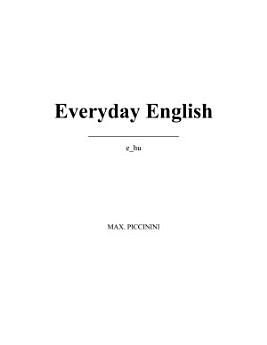
Max. Piccinini writes in the spaces where power meets paralysis.
Born between spreadsheets and silence, Piccinini crafts narratives that feel like locked rooms with two exits—one labeled "strategy," the other labeled "I can't believe you wrote that about me."
His work moves restlessly between the cold clarity of business logic and the chaotic, illogical warmth of human attachment. He is fascinated by "the invisible scripts of power"—the uniforms we wear, the selections we face without speaking, and the terrifying courage required to say something true when everyone is watching.
When not writing, Piccinini collects rejected marketing slogans, studies the architecture of government meeting rooms, and argues with fictional versions of himself. He believes that the hardest business decision isn't when to push—it's when to admit you miss someone.