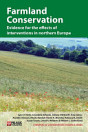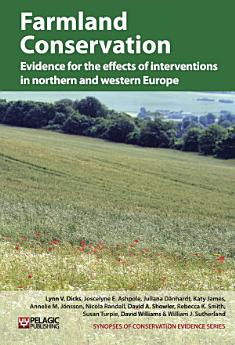
Farmland Conservation: Evidence for the effects of interventions in northern and western Europe

· · · · · · · · · ·
· Synopses of Conservation Evidence Book 3 · Pelagic Publishing Ltd
1 review
Ebook
400
Pages
Eligible

About this ebook

This synopsis covers evidence for the effects of conservation interventions for native farmland wildlife. It is restricted to evidence captured on the website www.conservationevidence.com. It includes papers published in the journal Conservation Evidence, evidence summarized on our database and systematic reviews collated by the Collaboration for Environmental Evidence. It is the thrid volume in the series Synopses of Conservation Evidence.

Evidence was collected from all European countries west of Russia, but not those south of France, Switzerland, Austria, Hungary and Romania.

A list of interventions to conserve wildlife on farmland was developed collaboratively by a team of thirteen experts. A number of interventions that are not currently agri-environment options were added during this process, such as ‘Provide nest boxes for bees (solitary or bumblebees)’ and ‘Implement food labelling schemes relating to biodiversity-friendly farming’. Interventions relating to the creation or management of habitats not considered commercial farmland (such as lowland heath, salt marsh and farm woodland) were removed.

The list of interventions was organized into categories based on the International Union for the Conservation of Nature (IUCN) classifications of direct threats and conservation actions. Interventions that fall under the threat category ‘Agriculture’ are grouped by farming system, with separate sections for interventions that apply to arable or livestock farms, or across all farming types.

This synopsis covers evidence for the effects of conservation interventions for native farmland wildlife. It is restricted to evidence captured on the website www.conservationevidence.com. It includes papers published in the journal Conservation Evidence, evidence summarized on our database and s...

Discover more

Ratings and reviews

1 review
luvuyo majola
October 6, 2015
Yes I can rate this app be cous agriculture its our life's and it's gave us the leading way of life I may say that about agri's app's
Did you find this helpful?

About the author

Lynn Dicks is a Research Fellow at the Department of Zoology, University of Cambridge. She has been a NERC Knowledge Exchange Fellow, linked to the Insect Pollinators Initiative(2011-2014) and a Co-ordinating Lead Author of the IPBES Thematic assessment of pollinators, pollination and food production. She has a degree from Oxford University in Biological Sciences (1995) and a PhD from Cambridge University (2002) on the ecology of flower-visiting insects. Dr Rebecca K. Smith is a Research Associate at the University of Cambridge. She holds degrees in the ecology & conservation of European hares (PhD, University of Bristol), Applied Ecology & Conservation (MSc, University of East Anglia) and Biology (BSc with Honours, University of Bristol). Dr Smith is part of the Conservation Evidence group at the University of Cambridge, which focuses on summarising and disseminating scientific evidence about the effects of conservation interventions for habitats and species. She is an author of the Farmland Conservation synopsis and has undertaken systematic reviews on the effectiveness of conservation management for birds. Prior to this work Dr Smith undertook projects developing monitoring and management strategies for high conservation priority mammal species. Her current scientific duties include facilitating the development of further synopses including bat, reptile and forest conservation and invasive species management. She is also the Editorial Administrator of the Conservation Evidence Journal. Bill Sutherland is Miriam Rothschild Professor of Conservation Biology at the University of Cambridge and President of the British Ecological Society. He is known for his research on integrating science and policy particularly in the field of evidence-based conservation. Two of his key contributions have been the horizon-scanning exercises to identify future priority issues and the 100 important questions in various disciplines (ecology, poverty prevention, global agriculture and food amongst others). He has also worked extensively on bird population ecology and the biodiversity impacts of agriculture.
Lynn Dicks is a Research Fellow at the Department of Zoology, University of Cambridge. She has been a NERC Knowledge Exchange Fellow, linked to the Insect Pollinators Initiative(2011-2014) and a Co-ordinating Lead Author of the IPBES Thematic assessment of pollinators, pollination and food produc...

Rate this ebook

Tell us what you think.

Reading information

Smartphones and tablets
Install the Google Play Books app for Android and iPad/iPhone. It syncs automatically with your account and allows you to read online or offline wherever you are.
Laptops and computers
You can listen to audiobooks purchased on Google Play using your computer's web browser.
eReaders and other devices
To read on e-ink devices like Kobo eReaders, you'll need to download a file and transfer it to your device. Follow the detailed Help Center instructions to transfer the files to supported eReaders.