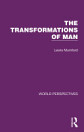
Herman Melville: Restored Classics to Go Edition

· Otbebookpublishing
Ebook
491
Pages
Eligible

About this ebook

Lewis Mumford's Herman Melville is both a literary biography and a searching critical study, built from Melville's letters, notebooks, and family recollections to recover not only the facts of his life but the force of his imagination. Mumford argues that Melville's obscurity to his contemporaries concealed a greatness equal to the largest achievements in English literature, especially Moby-Dick, which he sees as a poetic epic of religious and philosophical depth. He insists that Melville's life and art cannot be separated: the writer was a realist in the deepest sense, confronting suffering, evil, death, and the abyss without illusion. The book places Melville against the provincial, sea-linked world of early nineteenth-century New York, where Dutch-descended families prized property, respectability, and appearance over inner vitality. His parents, Allan and Maria Melville, are portrayed as polished yet spiritually limited, while his own childhood was shaped by privilege, emotional distance, fragile health, and periods of confinement that deepened his reflective temperament. Mumford traces how this background, along with Melville's physical energy, sea experiences, and spiritual struggles, helped produce a body of work that fuses adventure, symbolism, natural history, verse, and philosophy into a vast meditation on fate, evil, and the human struggle to make meaning from chaos. This edition has been fully restored with modern typesetting, custom cover design.
Lewis Mumford's Herman Melville is both a literary biography and a searching critical study, built from Melville's letters, notebooks, and family recollections to recover not only the facts of his life but the force of his imagination. Mumford argues that Melville's obscurity to his contemporarie...

Discover more

About the author

Lewis Mumford was an American historian, critic, and public intellectual whose wide-ranging work helped shape modern thinking about cities, technology, architecture, and culture. Born in 1895 in New York, he came of age during a period of rapid industrial change, and that experience gave urgency to his lifelong effort to understand how human beings could live more fully amid the forces of modernity. Over many decades, he wrote influential studies that ranged across literature, urban life, and the history of civilization, earning a reputation for clarity, moral seriousness, and an unusually broad vision. He was especially admired for bringing together social criticism and cultural analysis, showing that buildings, machines, and institutions are never merely practical things but expressions of human values. His writing often returned to the tension between mechanization and individuality, the promise and danger of technological progress, and the need for cities that nourish rather than diminish human life. Those concerns remain strikingly relevant today, as readers continue to wrestle with urban sprawl, environmental strain, and the effects of technology on community and attention. Mumford's legacy endures because he asked not only how societies function, but how they ought to function if they are to support dignity, imagination, and democratic life. Readers interested in literature, urbanism, social criticism, and the deeper meanings of modern civilization will find him especially rewarding.
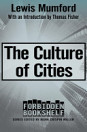
Lewis Mumford was an American historian, critic, and public intellectual whose wide-ranging work helped shape modern thinking about cities, technology, architecture, and culture. Born in 1895 in New York, he came of age during a period of rapid industrial change, and that experience gave urgency ...

Rate this ebook

Tell us what you think.

Reading information

Smartphones and tablets
Install the Google Play Books app for Android and iPad/iPhone. It syncs automatically with your account and allows you to read online or offline wherever you are.
Laptops and computers
You can listen to audiobooks purchased on Google Play using your computer's web browser.
eReaders and other devices
To read on e-ink devices like Kobo eReaders, you'll need to download a file and transfer it to your device. Follow the detailed Help Center instructions to transfer the files to supported eReaders.