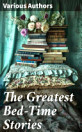
The Greatest Bed-Time Stories: Fascinating Tales of Magic, Fairies & Animal Tales (Peter Rabbit, The Wizard of Oz, Uncle Wiggily...)
Lewis Carroll · Oscar Wilde · George MacDonald · Jack London · Louisa May Alcott · Laura Lee Hope · Andrew Lang · Maurice Maeterlinck · Johnny Gruelle · Aesop · Hugh Lofting · Anna Sewell · Rudyard Kipling · Beatrix Potter · John Ruskin · Arthur Ransome · Nathaniel Hawthorne · Georgette Leblanc · Carl Sandburg · Evelyn Sharp · Marion St. John Webb · L. Frank Baum · J. M. Barrie · R. Nisbet Bain · E. T. A. Hoffmann · Hans Christian Andersen · Vishnu Sharma · Margery Williams · Mary Louisa Molesworth · Howard R. Garis · Brothers Grimm · Thornton Burgess · Valery Carrick · W. R. S. Ralston
Nov 2023 · DigiCat
Ebook
10704
Pages
family_home
Eligible
info
About this ebook
Embark on an enchanting journey through the pages of 'The Greatest Bed-Time Stories', an anthology that weaves together the timeless magic of storytelling. This collection transcends generations, offering readers a kaleidoscope of themes, from whimsical imagination and moral lessons to profound adventures and dreamlike escapes. With an array of narrative styles, the book captures the essence of fairy tales, parables, fables, and fantastical journeys. The diversity in storytelling is palpable as readers encounter heartwarming tales that resonate universally, all handpicked to ignite the imagination before slumber. The anthology assembles an esteemed cadre of literary luminaries whose works have shaped the cultural and literary landscapes across centuries. Each author, from Aesop's ancient fables to the imaginative plots of Lewis Carroll and whimsical tales of Beatrix Potter, brings a unique perspective and depth to the collection. Aligning with historical and literary movements, the anthology showcases the transformative power of storytelling from the romanticism of Hawthorne and the realism of Kipling, to the magical realism of Hans Christian Andersen. Together, these voices forge a rich tapestry of narratives, enriching the bedtime ritual with timeless stories that have captivated audiences throughout history. 'Get ready to lose yourself in a tapestry of voices and visions with 'The Greatest Bed-Time Stories'. This collection offers not only the joy and nostalgia associated with classic tales, but also serves as an educational treasure trove, presenting various cultural and historical insights in one volume. It provides an immersive experience, encouraging readers—children and adults alike—to explore diverse storytelling traditions and meanings. A must-read for those seeking both comfort and enlightenment, this anthology promises to spark dialogue and foster a deeper appreciation for the timeless value of the bedtime story."}
Embark on an enchanting journey through the pages of 'The Greatest Bed-Time Stories', an anthology that weaves together the timeless magic of storytelling. This collection transcends generations, offering readers a kaleidoscope of themes, from whimsical imagination and moral lessons to profound a...
Discover more
About the author
Lewis Carroll, born Charles Lutwidge Dodgson on January 27, 1832, was a distinguished English writer, mathematician, logician, Anglican deacon, and photographer. Renowned for his literary prowess, Carroll is best known for his children's fiction, notably 'Alice's Adventures in Wonderland' and its sequel 'Through the Looking-Glass.' His inventive use of word play, fantasy, and logic has enchanted readers for generations, cementing his place as one of the most celebrated authors in the literary world (Cohen, 1995). Carroll's writing style is characterized by a unique blend of nonsensical whimsy and sophisticated linguistics, which has not only captivated children but also intrigued adults with its underlying layers of meaning and satire. While 'The Greatest Bed-Time Stories' is not one of Carroll's works, much like his esteemed fables, it potentially reflects the spirit of his whimsical storytelling and creative flair for the fantastical. Carroll's contributions extend beyond the realm of literature; his work in the fields of mathematics and logic, under his real name, exhibit his remarkable intellectual range (Wilson, 2008). His academic endeavors, however, were overshadowed by the enduring popularity of his fictional works. Carroll's influence on the literary canon is immeasurable, and his works remain omnipresent in various adaptations across multiple art forms, from theatre to film, and continue to inspire both readers and writers alike.
Lewis Carroll, born Charles Lutwidge Dodgson on January 27, 1832, was a distinguished English writer, mathematician, logician, Anglican deacon, and photographer. Renowned for his literary prowess, Carroll is best known for his children's fiction, notably 'Alice's Adventures in Wonderland' and its...
Rate this ebook
Tell us what you think.
Reading information
Smartphones and tablets
Install the Google Play Books app for Android and iPad/iPhone. It syncs automatically with your account and allows you to read online or offline wherever you are.
Laptops and computers
You can listen to audiobooks purchased on Google Play using your computer's web browser.
eReaders and other devices
To read on e-ink devices like Kobo eReaders, you'll need to download a file and transfer it to your device. Follow the detailed Help Center instructions to transfer the files to supported eReaders.