About this ebook
In the early twentieth century, African Americans created an agricultural community in northern Baja California, Mexico, which they called Little Liberia. As a transborder activist community, the people of Little Liberia sought to counter the forces of White supremacy in North America, primarily by building a stable financial and political foundation for African Americans. The story of this community, told in full for the first time in Little Liberia: A Dream of Black Freedom in the US-Mexico Borderlands, is one of Black innovation and cross-cultural enterprise at a time of racial persecution and political turbulence—a little known but instructive chapter in the intersecting history of Black America and the borderlands of the Southwest.
Organized by African American businessmen chiefly from California and Oklahoma, Little Liberia began as the Lower California Mexican Land Development Company, which strove to build African American economic power through agricultural production outside the nation's borders. Its sister organization, the International Community Welfare League, dedicated itself to fighting the spread of White supremacy by unifying African Americans, Indigenous peoples, and people of Mexican descent. Laura Hooton describes how these entities jointly navigated US-Mexico politics during World War I and the Mexican Revolution, including issues of land ownership, immigration, race and ethnicity, and imperialism and colonialism. Her book traces the community's shifting business focus, geographic scope, and membership over its eleven-year history—its formation in Los Angeles, recruitment in Oklahoma after the Tulsa Race Massacre, expansion of relations with Mexican politicians, and highly public collapse.
Little Liberia was born out of the intersection of Black spaces and borderland places, and its story, in Hooton's deft telling, reveals the crucial role of that intersection in the history of race, borderlands, immigration, social movements, and White supremacy in the United States and Mexico.
In the early twentieth century, African Americans created an agricultural community in northern Baja California, Mexico, which they called Little Liberia. As a transborder activist community, the people of Little Liberia sought to counter the forces of White supremacy in North America, primarily ...
Discover more
About the author
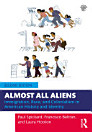
Laura Hooton is Assistant Professor of History at New Mexico State University and co-author of Almost All Aliens: Immigration, Race, and Colonialism in American History and Identity, Second Edition.
Laura Hooton is Assistant Professor of History at New Mexico State University and co-author of Almost All Aliens: Immigration, Race, and Colonialism in American History and Identity, Second Edition.
Rate this ebook
Tell us what you think.
Reading information
Smartphones and tablets
Install the Google Play Books app for Android and iPad/iPhone. It syncs automatically with your account and allows you to read online or offline wherever you are.
Laptops and computers
You can listen to audiobooks purchased on Google Play using your computer's web browser.
eReaders and other devices
To read on e-ink devices like Kobo eReaders, you'll need to download a file and transfer it to your device. Follow the detailed Help Center instructions to transfer the files to supported eReaders.