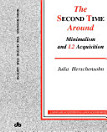
Language Development and Age
Julia Herschensohn
Okt 2007 · Cambridge University Press
eBook
Tentang eBook ini
The anecdotal view of language acquisition is that children learn language with apparent ease, no instruction and in very little time, while adults find learning a new language to be cognitively challenging, labour intensive and time-consuming. In this book Herschensohn examines whether early childhood is a critical period for language acquisition after which individuals cannot learn a language as native speakers. She argues that a first language is largely susceptible to age constraints, showing major deficits past the age of twelve. Second-language acquisition also shows age effects, but with a range of individual differences. The competence of expert adult learners, the unequal achievements of child learners of second languages, and the lack of consistent evidence for a maturational cut-off, all cast doubt on a critical period for second-language acquisition.
The anecdotal view of language acquisition is that children learn language with apparent ease, no instruction and in very little time, while adults find learning a new language to be cognitively challenging, labour intensive and time-consuming. In this book Herschensohn examines whether early chi...
Beri rating eBook ini
Sampaikan pendapat Anda.
Informasi bacaan
Smartphone dan tablet
Instal aplikasi Google Play Buku untuk Android dan iPad/iPhone. Aplikasi akan disinkronkan secara otomatis dengan akun Anda dan dapat diakses secara online maupun offline di mana saja.
Laptop dan komputer
Anda dapat mendengarkan buku audio yang dibeli di Google Play menggunakan browser web komputer.
eReader dan perangkat lainnya
Untuk membaca di perangkat e-ink seperti Kobo eReaders, Anda perlu mendownload file dan mentransfernya ke perangkat Anda. Ikuti petunjuk Pusat bantuan yang mendetail untuk mentransfer file ke eReaders yang didukung.