About this ebook
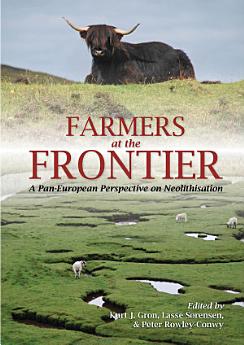
All farming in prehistoric Europe ultimately came from elsewhere in one way or another, unlike the growing numbers of primary centers of domestication and agricultural origins worldwide. This fact affects every aspect of our understanding of the start of farming on the continent because it means that ultimately, domesticated plants and animals came from somewhere else, and from someone else. In an area as vast as Europe, the process by which food production becomes the predominant subsistence strategy is of course highly variable, but in a sense the outcome is the same, and has the potential for addressing more large-scale questions regarding agricultural origins. Therefore, a detailed understanding of all aspects of farming in its absolute earliest form in various regions of Europe can potentially provide a new perspective on the mechanisms by which this monumental change comes to human societies and regions. In this volume, we aim to collect various perspectives regarding the earliest farming from across Europe. Methodological approaches, archaeological cultures, and geographic locations in Europe are variable, but all papers engage with the simple question: What was the earliest farming like? This volume opens a conversation about agriculture just after the transition in order to address the role incoming people, technologies, and adaptations have in secondary adoptions.
The book starts with an introduction by the editors which will serve to contextualize the theme of the volume. The broad arguments concerning the process of neolithisation are addressed, and the rationale for the volume discussed. Contributions are ordered geographically and chronologically, given the progression of the Neolithic across Europe. The editors conclude the volume with a short commentary paper regarding the theme of the volume.
The book starts with an introduction by the editors which will serve to contextualize the theme of the volume. The broad arguments concerning the process of neolithisation are addressed, and the rationale for the volume discussed. Contributions are ordered geographically and chronologically, given the progression of the Neolithic across Europe. The editors conclude the volume with a short commentary paper regarding the theme of the volume.
All farming in prehistoric Europe ultimately came from elsewhere in one way or another, unlike the growing numbers of primary centers of domestication and agricultural origins worldwide. This fact affects every aspect of our understanding of the start of farming on the continent because it means ...
Discover more
About the author
Kurt Gron is a Post-Doctoral Research Associate, Department of Archaeology, Durham University. He specialises in wild and domestic fauna from the Stone Age in northern Europe stable isotope geochemistry; shell middens and shell midden taphonomy.
Lasse Sørensen is Associated Professor in Archaeology at Århus University specialising in Mesolithic and Neolithic economic developments and zooarchaeology.
Peter Rowley-Conwy is professor of environmental archaeology at Durham University. He specialises in hunter-gatherers, early farmers, and the transition to agriculture. He has worked on Mesolithic and Neolithic animal bones in various parts of Europe including Denmark, Italy and Portugal, and the Middle East.
Kurt Gron is a Post-Doctoral Research Associate, Department of Archaeology, Durham University. He specialises in wild and domestic fauna from the Stone Age in northern Europe stable isotope geochemistry; shell middens and shell midden taphonomy.
Lasse Sørensen is Associated Professor in Archaeolo...
Rate this ebook
Tell us what you think.
Reading information
Smartphones and tablets
Install the Google Play Books app for Android and iPad/iPhone. It syncs automatically with your account and allows you to read online or offline wherever you are.
Laptops and computers
You can listen to audiobooks purchased on Google Play using your computer's web browser.
eReaders and other devices
To read on e-ink devices like Kobo eReaders, you'll need to download a file and transfer it to your device. Follow the detailed Help Center instructions to transfer the files to supported eReaders.