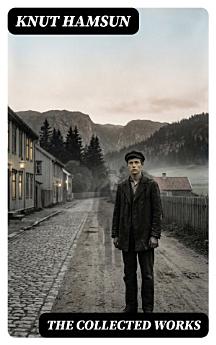
The Collected Works: Enriched edition. Psychological Modernist Tales of Urban Alienation, Existential Angst, and Human Desire in Norway
Knut Hamsun
Nov 2022 · DigiCat
Ebook
1729
Pages
family_home
Eligible
info
About this ebook
In 'The Collected Works,' Knut Hamsun presents an intricate tapestry of human experience, weaving together psychological depth and profound introspection, hallmarks of his distinct literary style. This extensive compilation showcases the evolution of Hamsun's narrative technique, characterized by vivid imagery and stream-of-consciousness writing, often revealing the inner workings of his characters' minds. Set against a backdrop of late 19th and early 20th century Norway, the works explore themes of existential angst, the tension between nature and urban life, and the complexity of human emotions, making it a quintessential part of modernist literature. Knut Hamsun, awarded the Nobel Prize in Literature in 1920, was a complicated figure whose own life experiences shaped his writings. Growing up in rural Norway and later embracing a bohemian lifestyle in cities like Oslo and Paris, Hamsun's encounters with poverty, love, and ambition deeply influenced his representation of characters who grapple with their identity and desires. His works often reflect his belief in the primal instincts that drive human behavior, adding a layer of authenticity that resonates through each narrative. 'The Collected Works' is an essential reading for anyone interested in the evolution of modern literature and the exploration of the human psyche. Hamsun's profound insights and lyrical prose invite readers to not only engage with the text but to also reflect on their own existence. This anthology promises to enrich your understanding of the complexity of life, making it an invaluable addition to any literary library. In this enriched edition, we have carefully created added value for your reading experience: - A comprehensive Introduction outlines these selected works' unifying features, themes, or stylistic evolutions. - The Author Biography highlights personal milestones and literary influences that shape the entire body of writing. - A Historical Context section situates the works in their broader era—social currents, cultural trends, and key events that underpin their creation. - A concise Synopsis (Selection) offers an accessible overview of the included texts, helping readers navigate plotlines and main ideas without revealing critical twists. - A unified Analysis examines recurring motifs and stylistic hallmarks across the collection, tying the stories together while spotlighting the different work's strengths. - Reflection questions inspire deeper contemplation of the author's overarching message, inviting readers to draw connections among different texts and relate them to modern contexts. - Lastly, our hand‐picked Memorable Quotes distill pivotal lines and turning points, serving as touchstones for the collection's central themes.
In 'The Collected Works,' Knut Hamsun presents an intricate tapestry of human experience, weaving together psychological depth and profound introspection, hallmarks of his distinct literary style. This extensive compilation showcases the evolution of Hamsun's narrative technique, characterized by...
About the author
Knut Hamsun (1859–1952) was a Norwegian writer who was awarded the Nobel Prize in Literature in 1920. His contributions to literature have been profoundly influential, especially his novel 'Hunger' (Sult, 1890), which established him as one of the most important early figures in modern literature. Hamsun's work is characterized by deep exploration of the human mind and a distinctive narrative style that often reflects his characters' inner lives with psychological depth. His writings, which frequently portray the intimate connection between humans and nature, are considered precursors to existentialism and have inspired a wide range of writers. 'The Collected Works' of Hamsun brings together the breadth of his literary output, showcasing the variety of themes he tackled throughout his career. He evolved from the naturalistic style of his early years to a more introspective and modernist approach in his later works. Hamsun's impact on literature is underscored by his influence on a variety of twentieth-century writers, and his work continues to be studied for its innovative techniques in narrative and its complex portrayal of characters. Despite the acclaim, Hamsun's reputation became controversial due to his support of the Nazi regime during World War II, an aspect that has sparked considerable debate and reevaluation of his legacy.
Knut Hamsun (1859–1952) was a Norwegian writer who was awarded the Nobel Prize in Literature in 1920. His contributions to literature have been profoundly influential, especially his novel 'Hunger' (Sult, 1890), which established him as one of the most important early figures in modern literature...
Rate this ebook
Tell us what you think.
Reading information
Smartphones and tablets
Install the Google Play Books app for Android and iPad/iPhone. It syncs automatically with your account and allows you to read online or offline wherever you are.
Laptops and computers
You can listen to audiobooks purchased on Google Play using your computer's web browser.
eReaders and other devices
To read on e-ink devices like Kobo eReaders, you'll need to download a file and transfer it to your device. Follow the detailed Help Center instructions to transfer the files to supported eReaders.