About this ebook
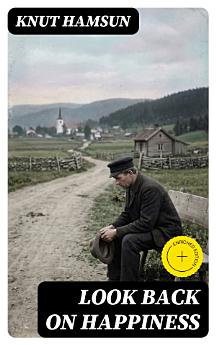
Knut Hamsun's "Look Back on Happiness" is a poignant exploration of memory and introspection, rendered in his characteristic prose that melds lyrical beauty with psychological depth. This semi-autobiographical novel weaves together threads of nostalgia and regret, as the protagonist reflects on formative moments that shaped his identity and worldview. Hamsun's narrative style, imbued with a naturalist sensibility, captures the intricacies of human emotion while drawing on the socio-cultural landscape of late 19th-century Norway, where the contrast between yearning and reality serves as a backdrop for the characters' existential struggles. Knut Hamsun, a Nobel laureate, was deeply influenced by his own experiences of solitude and alienation, themes that pervade his work. His life as a wandering writer across various European landscapes enriched his understanding of human nature and the complexities of existence, which manifest vividly in this book. Hamsun's fascination with the dichotomy of happiness and suffering ultimately propels readers into a reflective engagement with the essence of their own lives, echoing the author's own tumultuous journey through fame and personal challenges. "Look Back on Happiness" is a must-read for those seeking a profound literary experience that invites contemplation on the nature of happiness and memory. Hamsun's compelling narrative will resonate with anyone interested in the depths of human experience and the quest for meaning in an often tumultuous world. In this enriched edition, we have carefully created added value for your reading experience: - A succinct Introduction situates the work's timeless appeal and themes. - The Synopsis outlines the central plot, highlighting key developments without spoiling critical twists. - A detailed Historical Context immerses you in the era's events and influences that shaped the writing. - An Author Biography reveals milestones in the author's life, illuminating the personal insights behind the text. - A thorough Analysis dissects symbols, motifs, and character arcs to unearth underlying meanings. - Reflection questions prompt you to engage personally with the work's messages, connecting them to modern life. - Hand‐picked Memorable Quotes shine a spotlight on moments of literary brilliance. - Interactive footnotes clarify unusual references, historical allusions, and archaic phrases for an effortless, more informed read.
Knut Hamsun's "Look Back on Happiness" is a poignant exploration of memory and introspection, rendered in his characteristic prose that melds lyrical beauty with psychological depth. This semi-autobiographical novel weaves together threads of nostalgia and regret, as the protagonist reflects on f...
Discover more
About the author
Knut Hamsun, born Knud Pedersen on August 4, 1859, in Lom, Norway, is a central figure in literary modernism and one of Norway's most influential novelists. Hamsun's upbringing in the rural Gudbrandsdal region informed much of his later writing, which often manifested a deep connection to nature. Hamsun's career was defined by his innovative narrative techniques, psychological depth, and exploration of the complexities of the human mind. His style evolved from naturalism to modernist exploration, reflecting the influence of Nietzsche and Dostoevsky. Hamsun achieved international acclaim with his 1890 novel, 'Hunger', an intense portrayal of a struggling writer. He received the Nobel Prize in Literature in 1920, notably for 'Growth of the Soil', a work celebrated for its epic depiction of pioneering life in Norway. A lesser-known novel, 'Look Back on Happiness', further showcases Hamsun's subtlety in exploring human psychology and his appreciation for the natural world. Despite his literary contributions, Hamsun's reputation was marred by his support for the Nazi regime during World War II, an aspect that has prompted complex discussions about his legacy. Hamsun's literary style continues to influence writers seeking to delve into the intricacies of human consciousness and the inner lives of characters. His works remain a testament to his prowess as a writer and his capacity to capture the nuances of human existence.
Knut Hamsun, born Knud Pedersen on August 4, 1859, in Lom, Norway, is a central figure in literary modernism and one of Norway's most influential novelists. Hamsun's upbringing in the rural Gudbrandsdal region informed much of his later writing, which often manifested a deep connection to nature....
Rate this ebook
Tell us what you think.
Reading information
Smartphones and tablets
Install the Google Play Books app for Android and iPad/iPhone. It syncs automatically with your account and allows you to read online or offline wherever you are.
Laptops and computers
You can listen to audiobooks purchased on Google Play using your computer's web browser.
eReaders and other devices
To read on e-ink devices like Kobo eReaders, you'll need to download a file and transfer it to your device. Follow the detailed Help Center instructions to transfer the files to supported eReaders.