About this ebook
Every scroll through a marketplace feed tells the same story: a faded band tee, a designer blazer, a pair of jeans finding a second life—no new thread manufactured. Secondhand apparel has surged into a $40–$60 billion global market growing faster than new apparel, yet most resale platforms still fail. They chase features instead of meaning, optimize transaction volume instead of trust, and watch margins compress until sellers drift to alternatives and buyers forget why they shopped pre-owned at all.
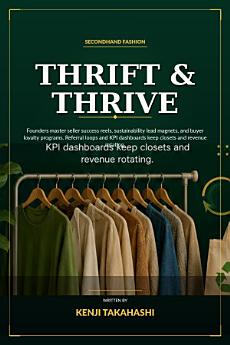
Thrift & Thrive is the operator's manual for building a secondhand fashion marketplace that survives that squeeze. Written for founders, platform teams, and entrepreneurs entering resale—whether you're curating vintage denim, authenticating luxury handbags, or moving everyday wardrobes—it replaces guesswork with mechanics grounded in how used-goods markets actually behave: heterogeneous inventory, higher trust barriers, deeper emotional resonance.
At its core is the Rotation Model: every marketplace must keep two flows spinning at once. Closet rotation is the rate listings sell and make room for new inventory; revenue rotation is the rate volume converts into sustainable income through take rate, gross merchandise value, and contribution margin. When either flow stagnates, the platform stalls. Too-slow closet turnover means sellers list, never sell, and quietly leave; too-slow revenue rotation means growth subsidizes itself into collapse. This book teaches you to diagnose which flow is broken and fix that first.
You'll learn to read a market the way the Phoenix founder in these pages did—counting Saturday-morning thrift-store traffic, mining local social signals, and discovering that two neighborhoods produced seventy percent of GMV from just thirty percent of the metro population. You'll audit seller onboarding to find exactly where sign-ups abandon ship, interview fallen-away sellers without defensiveness, and design one targeted intervention. You'll build a content engine on the ten-forty-fifty rule—ten percent high-effort features, forty percent spotlights, fifty percent daily posts—which turned eight weekly hours into doubled output once power sellers were trained as creators.
The metrics chapters hand you a liquidity dashboard organized around supply health, demand health, and balance health: the version profiled here cut average days-to-sell by thirty-five percent and lifted seller retention twenty-two percent in six months. The community chapters show why forums, contests, and recognition systems are operational infrastructure, not marketing garnish—one seller forum cut support tickets eighteen percent while participants retained thirty percent better, and a full three-layer community stack correlated with sixty percent higher retention and forty percent lower support costs.
Pricing gets equally rigorous treatment: seller autonomy backed by transparent, data-driven guidance and dynamic adjustment—a combination that cut pricing disputes forty-two percent and repaired category perception gaps between underpriced luxury and overpriced basics. Customer service is reframed as a retention engine, not a cost center, with proactive shipping alerts, at-risk transaction detection, and a four-stage complaint framework that compressed resolution from fourteen days to five while satisfaction climbed from forty to sixty-eight percent.
Every scroll through a marketplace feed tells the same story: a faded band tee, a designer blazer, a pair of jeans finding a second life—no new thread manufactured. Secondhand apparel has surged into a $40–$60 billion global market growing faster than new apparel, yet most resale platforms still ...
Discover more
Rate this ebook
Tell us what you think.
Reading information
Smartphones and tablets
Install the Google Play Books app for Android and iPad/iPhone. It syncs automatically with your account and allows you to read online or offline wherever you are.
Laptops and computers
You can listen to audiobooks purchased on Google Play using your computer's web browser.
eReaders and other devices
To read on e-ink devices like Kobo eReaders, you'll need to download a file and transfer it to your device. Follow the detailed Help Center instructions to transfer the files to supported eReaders.