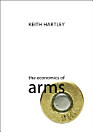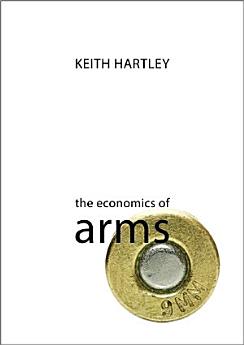
Economics of Arms
Jul 2017 · Edinburgh University Press
Ebook
269
Pages
Tools
info
family_home
Eligible
info
About this ebook
It is estimated that today some 2.7% of world GDP ($1.5 trillion) is spent on arms. In 2014 Lockheed Martin, the US defence contractor, had revenues of $45 billion the equivalent of the GDP of Tunisia. This book explores the business behind these breathtaking figures and explains how the arms industry makes its money.
The book begins by defining the industry, explaining why the sector is important, outlining its prime contractors and key supply chains. Its cost categories (from R&D to maintenance), the role of technical innovation, and the sector’s dependence on the monopsony buying power of Government, are all examined. The structure-conduct and performance model is used to show the workings of the arms market and its various entry and exit conditions, and the sector’s performance is analysed through various indicators including exports, development time scales, cost overruns and profitability. The complex choice problems of domestic procurement are considered alongside sales to foreign governments and the opportunities that may present for bribery and corruption.
The Military-Industrial-Political-Complex (MIPC) is unpacked and the behaviour of its major agents national defence agencies, the armed forces, producer groups, political agents (voters, political parties and budget-maximising bureaucracies) is scrutinised, both in times of conflict (expansion) and peace (contraction). The book concludes by considering future trends, such as whether arms industries are better under state or private ownership, and how they can meet the challenge of new threats in different forms. The discussion throughout is anchored to case studies from all parts of the world, including Brazil, Korea, Japan, Russia as well as UK, US and Europe.
As an authoritative non-technical introduction to the economics of arms industries, it is suitable for students of business studies, politics, international relations, political economy, strategic and defence studies as well as for courses on microeconomics and industrial economics. As a masterly summation from one of the world’s leading defence economists, it will also be required reading for staff in defence ministries, procurement agencies, the armed forces and strategic studies think-tanks throughout the world.
It is estimated that today some 2.7% of world GDP ($1.5 trillion) is spent on arms. In 2014 Lockheed Martin, the US defence contractor, had revenues of $45 billion the equivalent of the GDP of Tunisia. This book explores the business behind these breathtaking figures and explains how the arms ind...
Discover more
About the author
Keith Hartley is Emeritus Professor of Economics at the University of York. He was founding Editor of the journal Defence and Peace Economics and has, over the past 30 years, been a regular consultant on defence matters to the UK Government, United Nations, European Defence Agency, and the US Department of Defense, as well as to various arms companies, including BAE Systems. He is one of the world's leading defence economists having written over 500 articles, publications and reports, including over a dozen books.
Keith Hartley is Emeritus Professor of Economics at the University of York. He was founding Editor of the journal Defence and Peace Economics and has, over the past 30 years, been a regular consultant on defence matters to the UK Government, United Nations, European Defence Agency, and the US Dep...
Rate this ebook
Tell us what you think.
Reading information
Smartphones and tablets
Install the Google Play Books app for Android and iPad/iPhone. It syncs automatically with your account and allows you to read online or offline wherever you are.
Laptops and computers
You can listen to audiobooks purchased on Google Play using your computer's web browser.
eReaders and other devices
To read on e-ink devices like Kobo eReaders, you'll need to download a file and transfer it to your device. Follow the detailed Help Center instructions to transfer the files to supported eReaders.