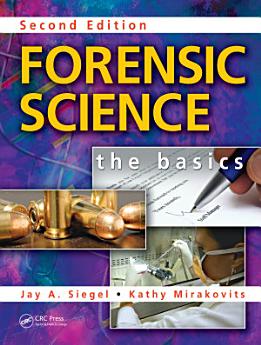
Forensic Science: The Basics, Second Edition, Edition 2
About this ebook
Following up on the tremendously popular first edition, Forensic Science: The Basics, Second Edition now adds the insight of a new co-author who is known nationally for training instructors how to teach forensic science at all levels of education. The book takes readers from the initial evidence collection process, through the evaluation procedures, right up to and including the courtroom presentation.
Packed with case studies, photographs, and exercises, this book provides everything the non-scientist needs to be able to understand and utilize the vital research approaches that forensic science can offer.
"Test Yourself" questions at the end of each chapter familiarize you with the language and approaches needed to understand and communicate with experienced crime scene investigators and laboratory personnel.
Offering the forensic sciences at their most accessible, Forensic Science: The Basics, Second Edition is a valuable resource for detectives, journalists, prosecutors, defense attorneys, and other non-science professionals who need to understand, interpret, and report on the newest advances in crime scene investigation.
PowerPoint® lecture slides, test bank, and other ancillary material on CD-ROM is available with qualifying course adoption
Discover more
About the author
Jay Siegel is currently Director of the Forensic and Investigative Sciences Program at Indiana University Purdue University, Indianapolis and Chair of the Department of Chemistry and Chemical Biology. He holds a Ph.D. in Analytical Chemistry from George Washington University. He worked for 3 years at the Virginia Bureau of Forensic Sciences, analyzing drugs, fire residues and trace evidence. From 1980 to 2004 he was professor of forensic chemistry and Director of the forensic science program at Michigan State University in the School of Criminal Justice. Dr. Siegel has testified over 200 times as an expert witness in 12 states, Federal Court and Military Court. He is Editor in Chief of the Encyclopedia of Forensic Sciences, author of Forensic Science: A Beginner’s Guide and Fundamentals of Forensic Science and has over 30 publications in forensic science journals. In February 2009, he was named Distinguished Fellow by the American Academy of Forensic Sciences. In April 2009 he named the Distinguished Alumni Scholar Award by his alma mater, George Washington University.
Kathy Mirakovits teaches forensic science and physics at Portage Northern High School in Portage, Michigan. She holds a Masters Degree in Science Education from Western Michigan University and a Bachelors Degree in Science Education from Miami University, and has over 10 graduate hours in Forensic Science. Kathy has also served as science department chairperson for six years at Portage Northern. She has taught at the high school level in Ohio, California and Michigan for almost 20 years, and during that time has taught general science, physical science, chemistry, biology, earth science and physics. Additionally, Kathy conducts workshops across the United States for teachers who wish to learn the application of forensic science in a school curriculum. She has developed numerous forensic science educational products for a national science supplier and has lead workshops at the National Science Teachers Association (NSTA) in forensic science. Kathy lead the teacher steering committee for the Forensic Science Educational Conference sponsored by the American Academy of Forensic Science at Michigan State University in August 2008.
Kathy has served as President of the Michigan Chapter of the American Association of Physics Teachers (AAPT) and has served as a curriculum writer for the Michigan Department of Education. Currently, Kathy serves as Director at Large for the Michigan Science Teachers Association. She has received the RadioShack Science Teaching Award and was a State Finalist for the Presidential Award for Excellence in Math and Science Teaching (PAEMST).