About this ebook
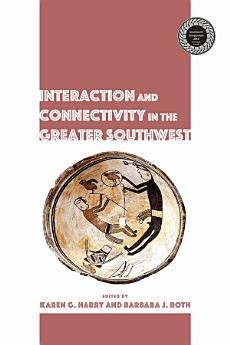
This volume of proceedings from the fourteenth biennial Southwest Symposium explores different kinds of social interaction that occurred prehistorically across the Southwest. The authors use diverse and innovative approaches and a variety of different data sets to examine the economic, social, and ideological implications of the different forms of interaction, presenting new ways to examine how social interaction and connectivity influenced cultural developments in the Southwest.
The book observes social interactions’ role in the diffusion of ideas and material culture; the way different social units, especially households, interacted within and between communities; and the importance of interaction and interconnectivity in understanding the archaeology of the Southwest’s northern periphery. Chapters demonstrate a movement away from strictly economic-driven models of social connectivity and interaction and illustrate that members of social groups lived in dynamic situations that did not always have clear-cut and unwavering boundaries. Social connectivity and interaction were often fluid, changing over time.
Interaction and Connectivity in the Greater Southwest is an impressive collection of established and up-and-coming Southwestern archaeologists collaborating to strengthen the theoretical underpinnings of the discipline. It will be of interest to professional and academic archaeologists, as well as researchers with interests in diffusion, identity, cultural transmission, borders, large-scale interaction, or social organization.
Contributors:
Richard V. N. Ahlstrom, James R. Allison, Jean H. Ballagh, Catherine M. Cameron, Richard Ciolek-Torello, John G. Douglass, Suzanne L. Eckert, Hayward H. Franklin, Patricia A. Gilman, Dennis A. Gilpin, William M. Graves, Kelley A. Hays-Gilpin, Lindsay D. Johansson, Eric Eugene Klucas, Phillip O. Leckman, Myles R. Miller, Barbara J. Mills, Matthew A. Peeples, David A. Phillips Jr., Katie Richards, Heidi Roberts, Thomas R. Rocek, Tammy Stone, Richard K. Talbot, Marc Thompson, David T. Unruh, John A. Ware, Kristina C. Wyckoff
This volume of proceedings from the fourteenth biennial Southwest Symposium explores different kinds of social interaction that occurred prehistorically across the Southwest. The authors use diverse and innovative approaches and a variety of different data sets to examine the economic, social, an...
About the author
Karen G. Harry is professor in the Department of Anthropology at the University of Nevada, Las Vegas. She has authored or coauthored three books, including Life beyond the Boundaries, and regularly publishes in peer-reviewed books and journals. Her ongoing field research focuses on Virgin Branch Puebloan settlements on the North Rim of the Grand Canyon.
Barbara J. Roth is professor and chair of the Department of Anthropology at University of Nevada, Las Vegas. She is the author of Agricultural Beginnings in the American Southwest, coeditor of five edited volumes, and author of numerous peer-reviewed journal articles and book chapters. Her research addresses the changes in household and community organization in the Mimbres region of southwestern New Mexico.
Barbara J. Roth is professor and chair of the Department of Anthropology at University of Nevada, Las Vegas. She is the author of Agricultural Beginnings in the American Southwest, coeditor of five edited volumes, and author of numerous peer-reviewed journal articles and book chapters. Her research addresses the changes in household and community organization in the Mimbres region of southwestern New Mexico.
Karen G. Harry is professor in the Department of Anthropology at the University of Nevada, Las Vegas. She has authored or coauthored three books, including Life beyond the Boundaries, and regularly publishes in peer-reviewed books and journals. Her ongoing field research focuses on Virgin Branch ...
Rate this ebook
Tell us what you think.
Reading information
Smartphones and tablets
Install the Google Play Books app for Android and iPad/iPhone. It syncs automatically with your account and allows you to read online or offline wherever you are.
Laptops and computers
You can listen to audiobooks purchased on Google Play using your computer's web browser.
eReaders and other devices
To read on e-ink devices like Kobo eReaders, you'll need to download a file and transfer it to your device. Follow the detailed Help Center instructions to transfer the files to supported eReaders.