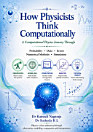
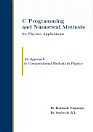
Reboot Brain with Excel and C
About this ebook
Learning progresses organically from intuitive and visual spreadsheet based calculations to structured and logical problem solving using C programming. This gradual transition allows concepts to settle before they are challenged, encouraging experimentation through changing values, rerunning programs, and working with real data. Each step reveals how abstract laws begin to behave when they are computed, simulated, and analyzed.
By integrating Excel and C, the book creates a seamless connection between theory and computation. Thinking, calculating, and visualizing work together to transform understanding from passive recognition into active insight. Patterns emerge, mistakes become instructive, and confidence grows quietly through practice.
Designed with postgraduate learning in mind, the book encourages persistence, curiosity, and independent exploration. It rewards patience and invites revisiting ideas from new angles. These pages are meant to be explored rather than rushed, offering an engaging pathway to develop clarity, reasoning, and computational thinking. The journey through the book leaves readers not only with stronger problem solving skills but also with a renewed way of approaching physics as a living, responsive, and deeply engaging discipline.
Discover more
Ratings and reviews

- Flag inappropriate

- Flag inappropriate

- Flag inappropriate
- Show review history
About the author
Dr Kamsali Nagaraja is a professor of physics at Bangalore University, India, specializing in atmospheric, space, and planetary physics. His teaching and research span physical processes in the Earth’s atmosphere and the planetary atmospheres of terrestrial planets, including the Martian exosphere. With over a decade of experience in physics education, he is known for connecting theory with computation and real-world data, enabling learners to analyze, visualize, and explore physical phenomena through structured reasoning.
Dr Susheela K L is an assistant professor of physics at Bangalore University, India. Her specialization lies in solid-state physics and materials science, with research interests focused on research-oriented glass systems. With formal training in education and a postgraduate diploma in computer applications, she integrates pedagogy, computation, and experimentation in her teaching. With over a decade of experience in higher education, she is known for presenting complex concepts with clarity and for encouraging learning by doing through critical thinking.