A Brief History of Mechatronics
About this ebook
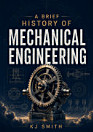
But mechanical engineering is not merely a parade of brilliant inventions—it is the discipline of limits, stresses, fatigue, and friction, of materials pushed to the breaking point and mechanisms that fail in unexpected, catastrophic ways. A Brief History of Mechanical Engineering confronts the disasters that taught the profession humility: the broken railway axle that revealed metal fatigue, the collapsed Kansas City Hyatt walkway that rewrote ethics codes, the Challenger's O-rings that reminded engineers that rubber gets stiff in the cold. It explores the field's present frontiers: additive manufacturing (3D printing), micromechanical devices smaller than a grain of sand, exoskeletons that restore mobility, and the grand challenge of building machines that can operate for decades without maintenance on a Martian desert. From the lever to the robot arm, from the camshaft to the continuously variable transmission, from the potter's wheel to the hard drive's spinning platter, this book offers an essential, accessible guide to the engineering discipline that quite literally moves the world. For tinkerers, makers, and anyone who has ever wondered how things work—this is the story of how we learned to make motion obey our will.