A Brief History of Communism
About this ebook
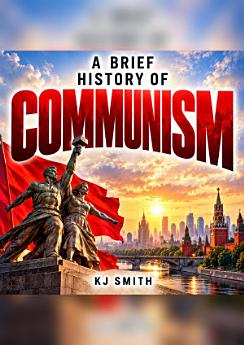
A Brief History of Communism explores the origins, evolution, and enduring influence of one of the most consequential political and economic ideologies in modern history. From early visions of communal ownership and equality to the revolutionary theories of Karl Marx and Friedrich Engels, this book traces the intellectual foundations and historical developments that gave rise to communist thought.
Discover how communism emerged as a response to industrial capitalism, economic inequality, and class divisions. Explore the Russian Revolution, the establishment of the Soviet Union, the Chinese Communist Revolution, and the spread of communist movements across Europe, Asia, Africa, and Latin America.
Through an accessible examination of Marxism, Leninism, Stalinism, Maoism, and other communist traditions, this book reveals how communist ideas were interpreted, adapted, and implemented under different historical and political circumstances. It examines the relationship between revolutionary theory and state power, including debates over collective ownership, central planning, political authority, individual freedoms, and economic organisation.
From the ideological struggles of the twentieth century and the geopolitical rivalries of the Cold War to the collapse of the Soviet Union and the transformation of communist-led economies, A Brief History of Communism considers the ambitions, achievements, contradictions, and human consequences associated with communist movements and governments.
The book also explores the continuing influence of communist ideas on contemporary political thought, labour movements, economic debates, and discussions about inequality, capitalism, and social justice.
Engaging, informative, and thought-provoking, A Brief History of Communism provides readers with an introduction to the thinkers, revolutions, political movements, and historical events that have defined communism across the world.
Explore the history of communism—and discover how its revolutionary ideas, political experiments, and enduring controversies continue to shape our understanding of power, equality, and the organisation of society.