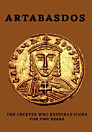
About this ebook
Emperor Theophilos was brilliant, just, and absolutely certain he was right. He demolished icons, tortured monks, exiled artists, and smashed sacred mosaics across Constantinople with a conviction that stunned even his enemies. He was also a passionate builder of palaces, a patron of learning, a ruler celebrated by ordinary citizens for his personal accessibility, and a military commander who held the mighty Abbasid Caliphate at bay across the eastern frontier.
And his own wife knelt before hidden icons behind his back.
Theophilos: The Last Iconoclast Emperor is the full, unflinching biography of the most paradoxical ruler in Byzantine history. From his birth in 812 into an empire already tearing itself apart over the veneration of religious images, through his thirteen turbulent years on the throne from 829 to 842, to his death having accomplished everything and saved nothing, this is a story of absolute conviction colliding with an equally absolute historical tide.
Grounded in Byzantine chronicles from Theophanes Continuatus and Joseph Genesios, Arab sources from al-Tabari, and modern scholarship from Leslie Brubaker, John Haldon, and Warren Treadgold, this book reconstructs Theophilos not as a caricature heretic but as a fully human emperor who believed with every fiber of his being that he was purifying Christianity — while the evidence mounted around him that he was fighting a war already lost.
He persecuted hundreds. His widow undid his entire legacy within a year of his death. The icons returned to every church in the empire.
Yet Theophilos remains one of the most gripping figures in all of Roman history precisely because he failed. Many emperors won. Only one stood as the final champion of a doomed cause, commanding armies and constructing magnificent palaces with one hand, and losing the only battle that ever truly mattered with the other.
Open this book. You will not be able to stop.