The Moon-Voyage
Sep 2022 · DigiCat
Ebook
276
Pages
family_home
Eligible
info
About this ebook
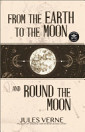
In 'The Moon-Voyage', Jules Verne crafts an illuminating narrative that melds the realms of science fiction and adventure, reflecting the 19th-century fascination with space exploration. This imaginative tale follows a group of intrepid characters as they embark on a daring journey to the moon, employing meticulous scientific detail and inventive machinery—hallmarks of Verne's literary style. The novel weaves speculative technology with earnest exploration, challenging contemporary notions of scientific possibility while cementing Verne's status as a pioneer of science fiction, influenced by the evolving scientific paradigms of his time, including the works of contemporaneous astronomers and burgeoning theoretical physics. Jules Verne, a visionary often hailed as the father of science fiction, was influenced by his background in literature and a deep-seated curiosity about the natural world and scientific advancement. Born in 1828 in Nantes, France, Verne's early life was embellished by explorations and adventures, shaping his belief in the power of human ingenuity. His writings often reflect a blend of optimism for the potential of science and critique of societal norms, making him a multifaceted figure whose work inspired generations of thinkers and writers. Featuring both thrilling escapades and deep philosophical inquiries, 'The Moon-Voyage' is not merely a tale of space travel but a profound commentary on human ambition. Readers seeking an engrossing adventure mingled with intellectual rigor will find Verne's narrative richly rewarding. This seminal work is essential for anyone interested in the evolution of speculative fiction and the historical context of science in literature.
In 'The Moon-Voyage', Jules Verne crafts an illuminating narrative that melds the realms of science fiction and adventure, reflecting the 19th-century fascination with space exploration. This imaginative tale follows a group of intrepid characters as they embark on a daring journey to the moon, e...
Discover more
About the author
Jules Verne (1828–1905), a French novelist, poet, and playwright, is often revered as the 'Father of Science Fiction.' Born in Nantes, France, Verne developed a passion for travel and adventure stories at a young age, a theme that deeply permeated his literary endeavors. He pursued legal studies in Paris but found his calling in literature. His collaboration with publisher Pierre-Jules Hetzel led to the creation of the 'Voyages extraordinaires' series, which aimed to educate readers while entertaining them with tales of exploration and technological innovation. A meticulous researcher, Verne incorporated the latest scientific discoveries into his works, thus rendering his speculative fiction with a prescient layer of plausible foresight. His novel 'The Moon-Voyage,' comprised of 'From the Earth to the Moon' and its sequel, 'Around the Moon,' beautifully encapsulates his forward-thinking vision. These works, teeming with rich details of space travel, preceded the actual lunar landings by over a century, showcasing Verne's ingenuity and influence on generations of science fiction literature. Throughout his oeuvre, which includes classics like 'Twenty Thousand Leagues Under the Seas' and 'Journey to the Center of the Earth,' Verne consistently combined adventure with a pedagogical intent, propelling his readers to see the world beyond the limitations of their own experiences. The legacy of his prolific career has left an indelible mark on literature and culture, laying the foundations for the genre of science fiction as we know it today.
Jules Verne (1828–1905), a French novelist, poet, and playwright, is often revered as the 'Father of Science Fiction.' Born in Nantes, France, Verne developed a passion for travel and adventure stories at a young age, a theme that deeply permeated his literary endeavors. He pursued legal studies ...
Rate this ebook
Tell us what you think.
Reading information
Smartphones and tablets
Install the Google Play Books app for Android and iPad/iPhone. It syncs automatically with your account and allows you to read online or offline wherever you are.
Laptops and computers
You can listen to audiobooks purchased on Google Play using your computer's web browser.
eReaders and other devices
To read on e-ink devices like Kobo eReaders, you'll need to download a file and transfer it to your device. Follow the detailed Help Center instructions to transfer the files to supported eReaders.