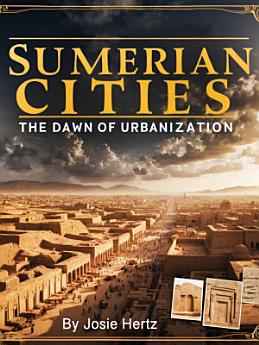
In the misty marshlands of southern Mesopotamia, where the waters of the Euphrates meandered through reed beds toward the Persian Gulf, there arose around 5400 BCE what may have been humanity's first true city. Eridu, known to the Sumerians as the sacred dwelling of Enki, god of fresh water and wisdom, represents the revolutionary moment when scattered agricultural settlements began their transformation into complex urban communities that would forever change the trajectory of human civilization. This ancient city, whose ruins lie buried beneath the Iraqi desert near modern Basra, witnessed the birth of urban planning, monumental architecture, and institutional governance while establishing precedents for city development that would influence urban civilization throughout history.The geographical advantages that led to Eridu's emergence as the world's first city included its strategic position near the confluence of the Euphrates River and the Persian Gulf, where abundant fresh water met rich alluvial soil deposits ideal for agriculture while providing access to maritime trade routes that connected Mesopotamia with distant lands. The site's location on slightly elevated ground protected it from seasonal floods while nearby marshlands provided reeds for construction, fish for protein, and waterfowl for additional food sources. This favorable environmental setting created conditions that could support larger populations than traditional farming communities while offering natural resources that enabled architectural innovation and craft specialization.
In the misty marshlands of southern Mesopotamia, where the waters of the Euphrates meandered through reed beds toward the Persian Gulf, there arose around 5400 BCE what may have been humanity's first true city. Eridu, known to the Sumerians as the sacred dwelling of Enki, god of fresh water and w...