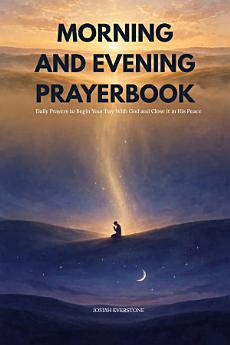
MORNING AND EVENING PRAYERBOOK: Daily Prayers to Begin Your Day With God and Close It in His Peace
About this ebook
built this prayerbook around one of the oldest rhythms of faith: meeting God at the rising of the sun and again at its setting. Scripture has always pointed believers toward this pattern, and this book gives you twelve chapters of prayers to practice it, moving from morning prayer for strength, peace, and courage, through prayer for family, work, and provision, guidance and decisions, and protection, into evening prayer for confession, forgiveness, rest, and sleep. A dedicated section addresses difficult seasons and God's provision and healing, and the book closes with a thirty day morning and evening plan you can follow straight through.
This is not a modern invention dressed up as ancient wisdom. Everstone grounds every chapter in a tradition of prayer that stretches back seventeen centuries, citing Augustine's Confessions from around the year 400, the King James Bible of 1611, Brother Lawrence's Practice of the Presence of God from the seventeenth century, the Book of Common Prayer's 1662 edition, Andrew Murray's classic With Christ in the School of Prayer from 1885, E.M. Bounds's Power Through Prayer from 1907, and Charles Spurgeon's own Morning and Evening from 1866, right up through Timothy Keller's contemporary study of prayer published in 2014. Few prayerbooks on the market can claim this depth of historical grounding behind every single page.
For the worshiper who wants a daily rhythm instead of scattered requests, and for the clergyman looking for a resource sturdy enough to recommend from the pulpit or hand to a new believer, this book gives structure without losing warmth. It treats prayer as relationship rather than transaction, and it gives you the words to open every morning with direction and close every night with peace. Buy it today and give your mornings and evenings the anchor Scripture has always pointed believers toward.
Discover more
About the author
Josiah Everstone writes Christian resources built around daily spiritual discipline, particularly prayer, stewardship, and a consistent walk with God. His work draws on centuries of Christian prayer tradition, from the early church through the Reformation and into contemporary practice, because he believes a rhythm of prayer that has held up across that much history is worth passing on intact rather than reinventing. His conviction behind this book is simple: a day anchored in prayer at its beginning and its end becomes a life anchored in God.