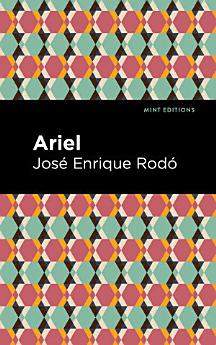
Ariel

· Graphic Arts Books
Ebook
68
Pages
Tools
Eligible

About this ebook

Ariel (1922) is an essay by José Enrique Rodó. Originally published in Spanish in 1900, Ariel was translated into English just five years after the author’s death by F. J. Stimson, the former U. S. Ambassador to Argentina. The essay was immediately influential in Uruguay and across Latin America as an essential document of modernismo, a literary movement which sought to unite classical values and contemporary culture through a devotion to beauty and form. “The gifts of the youthful spirit—enthusiasm and hope—correspond in the harmonies of history and natural history to movement and to light. Wherever you shall turn your eyes you will find these, the natural atmosphere in which move all things that are strong and beautiful.” Captivated by a bronze statue of Ariel from Shakespeare’s The Tempest, a teacher known as Prospero speaks passionately to his young students on the eve of summer vacation. Taking a historical view of human civilization, José Enrique Rodó applies the teachings of the Enlightenment to the political reality facing Latin America in the early twentieth century. Promoting morality and idealism over the encroaching utilitarianism of North America, Rodó crafted what one critic called “the ethical gospel of the Spanish-speaking new world.” With a beautifully designed cover and professionally typeset manuscript, this edition of José Enrique Rodó’s Ariel is a classic of Uruguayan literature reimagined for modern readers.
Ariel (1922) is an essay by José Enrique Rodó. Originally published in Spanish in 1900, Ariel was translated into English just five years after the author’s death by F. J. Stimson, the former U. S. Ambassador to Argentina. The essay was immediately influential in Uruguay and across Latin America ...

About the author

José Enrique Rodó (1871-1917) was a Uruguayan philosopher, educator, and essayist. Born and raised in Montevideo, Rodó was a major figure of the modernismo literary movement. In 1898, he was appointed professor of literature at the University of the Republic. Additionally, Rodó served as the director of the National Library of Uruguay and as a member of the Chamber of Deputies. Through his correspondence with Leopoldo Alas of Spain, José de la Riva-Agüero of Peru, and Rubén Darío of Nicaragua, Rodó became the leading theorist of modernista literature, which sought to unite classical values and contemporary culture through a devotion to beauty and form. His major contribution to Latin American literature was Ariel (1900), an influential essay inspired by characters from Shakespeare’s The Tempest. The essay is structured as a lecture by Prospero on authors from throughout European history. Ariel and Caliban, respectively the positive and negative aspects of human nature, represent the opposing forces of good and evil, the beautiful and the utilitarian in everyday life. Throughout his career, Rodó criticized the process of nordomanía, a term he used to describe the growing influence of North American values on Latin American culture.

José Enrique Rodó (1871-1917) was a Uruguayan philosopher, educator, and essayist. Born and raised in Montevideo, Rodó was a major figure of the modernismo literary movement. In 1898, he was appointed professor of literature at the University of the Republic. Additionally, Rodó served as the dire...

Rate this ebook

Tell us what you think.

Reading information

Smartphones and tablets
Install the Google Play Books app for Android and iPad/iPhone. It syncs automatically with your account and allows you to read online or offline wherever you are.
Laptops and computers
You can listen to audiobooks purchased on Google Play using your computer's web browser.
eReaders and other devices
To read on e-ink devices like Kobo eReaders, you'll need to download a file and transfer it to your device. Follow the detailed Help Center instructions to transfer the files to supported eReaders.