About this ebook
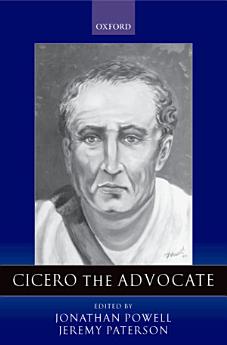
This is the first book in English to take Cicero's forensic speeches seriously as acts of advocacy, i.e. as designed to ensure that the person he represents is acquitted or that the person he is prosecuting is found guilty. It seeks to set the speeches within the context of the court system of the Late Roman Republic and to explore in detail the strategies available to Roman advocates to win the votes of jurors. The volume comprises a substantial introduction, fourteen chapters by prominent Ciceronian scholars in Britain, North America, and Germany, and a final chapter by a current British Appeal Court judge who comments on Cicero's techniques from the point of view of a modern advocate. The introduction deals with issues concerning the general nature of advocacy, the Roman court system as compared with other ancient and modern systems, the Roman 'profession' of advocacy and its etiquette, the place of advocacy in Cicero's career, the ancient theory of rhetoric and argument as applied to courtroom advocacy, and the relationship between the published texts of the speeches as we have them and the speeches actually delivered in court. The first eight chapters discuss general themes: legal procedure in Cicero's time, Cicero's Italian clients, Cicero's methods of setting out or alluding to the facts of a case, his use of legal arguments, arguments from character, invective, self-reference, and emotional appeal, the last of these especially in the concluding sections of his speeches. Chapters 9-14 examine a range of particular speeches as case studies - In Verrem II.1 (from Cicero's only major extant prosecution case), Pro Archia, De Domo Sua, Pro Caecina, Pro Cluentio, Pro Ligario. These speeches cover the period of the height of Cicero's career, from 70 BC, when Cicero became acknowledged as the leading Roman advocate, to 49 BC when Caesar's dictatorship required Cicero to adapt his well-tried forensic techniques to drastically new circumstances, and they contain arguments on a wide range of subject-matter, including provincial maladministration, usurpation of citizenship rights, violent dispossession, the religious law relating to the consecration of property, poisoning, bribery, and political offences. Other speeches, including all the better-known ones, are used as illustrative examples in the introduction and in the more general chapters. An appendix lists all Cicero's known appearances as an advocate.
This is the first book in English to take Cicero's forensic speeches seriously as acts of advocacy, i.e. as designed to ensure that the person he represents is acquitted or that the person he is prosecuting is found guilty. It seeks to set the speeches within the context of the court system of th...
About the author
Jonathan Powell is Professor of Latin, Royal Holloway, University of London. Jeremy Paterson is Senior Lecturer in Ancient History, University of Newcastle upon Tyne.
Jonathan Powell is Professor of Latin, Royal Holloway, University of London. Jeremy Paterson is Senior Lecturer in Ancient History, University of Newcastle upon Tyne.
Rate this ebook
Tell us what you think.
Reading information
Smartphones and tablets
Install the Google Play Books app for Android and iPad/iPhone. It syncs automatically with your account and allows you to read online or offline wherever you are.
Laptops and computers
You can listen to audiobooks purchased on Google Play using your computer's web browser.
eReaders and other devices
To read on e-ink devices like Kobo eReaders, you'll need to download a file and transfer it to your device. Follow the detailed Help Center instructions to transfer the files to supported eReaders.


