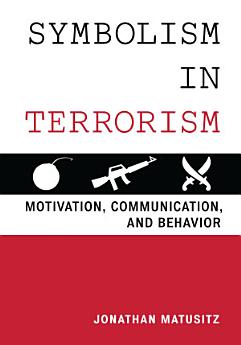
Symbolism in Terrorism: Motivation, Communication, and Behavior
Sep 2014 · Bloomsbury Publishing PLC
Ebook
352
Pages
About this ebook
The symbolic value of targets is what differentiates terrorism from other forms of extreme violence. Terrorism is designed to inflict deep psychological wounds on an enemy rather than demolish its material ability to fight. The September 11, 2001 attacks, for example, demonstrated the power of symbolism. The World Trade Center was targeted by Al Qaeda because the Twin Towers epitomized Western civilization, U.S. imperialism, financial success, modernity, and freedom.
The symbolic character of terrorism is the focus of this textbook. A comprehensive analysis, it incorporates descriptions, definitions, case studies, and theories. Each chapter focuses on a specific dimension of symbolism in terrorism and explains the contexts and processes that involve the main actors as well as the symbolism of both the purposes and targets of terrorism. Also discussed are new religious movements, which represent another important aspect of terrorism, such as Aum Shinrikyo, the Japanese cult that used sarin gas in the Tokyo subway in 1995.
Over forty areas of symbolism are covered throughout the chapters, including physical and non-physical symbolism, linguistic symbolism, the social construction of reality, rituals, myths, performative violence, iconoclasm, brand management, logos, semiotics, new media, and the global village. This allows for an in-depth examination of many issues, such as anti-globalization, honor killing, religious terrorism, suicide terrorism, martyrdom, weapons, female terrorism, public communication, visual motifs, and cyberspace. Main concepts are clearly defined, and followed by theory illustrated by international case studies. Chapter summaries, key points, review questions, research and practice suggestions are recurring components as well. This groundbreaking text encompasses all major aspects of symbolism in terrorism and will be an essential resource for anyone studying terrorism.
The symbolic value of targets is what differentiates terrorism from other forms of extreme violence. Terrorism is designed to inflict deep psychological wounds on an enemy rather than demolish its material ability to fight. The September 11, 2001 attacks, for example, demonstrated the power of sy...
Discover more
About the author
Jonathan Matusitz is a tenured associate professor in the Nicholson School of Communication at the University of Central Florida. He has also taught at a NATO-affiliated military base in Belgium and is doing research on suicide terrorism for the Ministry of Defense in India. In 2011, his research was cited by the U.S. Supreme Court. His most recent book is Terrorism and Communication: A Critical Introduction (2012).
Jonathan Matusitz is a tenured associate professor in the Nicholson School of Communication at the University of Central Florida. He has also taught at a NATO-affiliated military base in Belgium and is doing research on suicide terrorism for the Ministry of Defense in India. In 2011, his research...
Rate this ebook
Tell us what you think.
Reading information
Smartphones and tablets
Install the Google Play Books app for Android and iPad/iPhone. It syncs automatically with your account and allows you to read online or offline wherever you are.
Laptops and computers
You can listen to audiobooks purchased on Google Play using your computer's web browser.
eReaders and other devices
To read on e-ink devices like Kobo eReaders, you'll need to download a file and transfer it to your device. Follow the detailed Help Center instructions to transfer the files to supported eReaders.