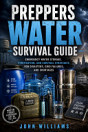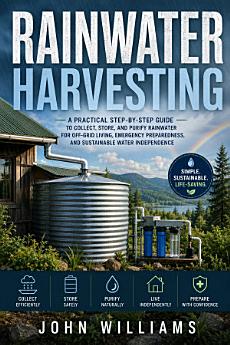
About this ebook
Municipal water systems fail when you need them most. Power outages halt pumping stations. Droughts deplete reservoirs. Aging infrastructure breaks without warning. Floods contaminate treatment plants. Your family's water security hangs on fragile systems you cannot control.
Rainwater harvesting changes everything.
This complete guide walks you through every stage of building your own water independence—from placing your first barrel to designing whole-home systems that work during blackouts and emergencies. No engineering degree required. No expensive contractors necessary. Just practical, proven methods that deliver clean water when you need it most.
Why this book works for beginners and experienced harvesters alike:
Discover how much water your roof actually collects—the numbers will surprise you. Learn which roofing materials produce the safest drinking water and which ones to avoid entirely. Master first-flush systems that remove the dirtiest rainwater before it reaches your storage. Build filtration systems anyone can assemble with basic tools. Design storage that prevents algae, bacteria, and contamination year after year.
What you'll gain from this guide:
Complete water security—Design systems that work during power outages, natural disasters, and municipal failures. Calculate exactly how much water your family needs for survival situations. Build portable collection setups for emergencies. Disaster-proof your water supply with multiple backup strategies.
Massive savings on water bills—Small home systems that changed water bills completely. Budget-friendly setups under one hundred dollars. Smart upgrades that pay for themselves within months. Real-world case studies showing exactly what works.
Thriving gardens and food production—Discover why plants prefer rainwater over tap water. Set up irrigation systems using stored rainwater. Learn drip versus gravity-fed systems explained simply. Boost crop growth naturally with the purest water available.
Safe drinking water from rain—Essential purification methods you must know. Boiling, UV, and filtration systems compared. Home water quality testing made simple. Critical safety mistakes to avoid. Complete treatment protocols for potable water.
Step-by-step guidance that guarantees success:
Understand rainwater as a free resource
Choose the right catchment area for your property
Design gutters, pipes, and flow systems that actually work
Build first-flush systems and filtration anyone can master
Select storage tanks and barrels that last decades
Implement advanced water independence strategies
Maintain your system with simple seasonal checklists
Scale from budget setup to complete off-grid autonomy
Real solutions from real implementations:
Read actual case studies from homeowners who achieved complete water independence. Learn from their successes and mistakes. See small systems that scaled over time. Understand how urban apartments harvest rainwater effectively. Discover off-grid families surviving solely on collected rain.
Hidden hacks most people never use:
Underground storage tricks for long-term safety. Rainwater and solar hybrid systems. Emergency purification using simple household tools. Smart water conservation techniques. Advanced upgrades for future expansion.
Your path to water independence starts this week.
No special skills required. No expensive equipment needed. Just clear, actionable guidance from a practical resource that delivers results.
Stop depending on fragile municipal systems. Start harvesting nature's most abundant resource. Secure your family's water future today.
Discover more
Ratings and reviews
About the author
John Williams is a writer focused on practical self-sufficiency, survival preparedness, and sustainable living systems. His work is centered on helping everyday people develop real-world skills that improve resilience during emergencies, reduce dependence on public utilities, and support long-term independence.
With a strong interest in off-grid solutions and environmental sustainability, John Williams writes clear, step-by-step guides that break down complex systems into simple, actionable methods. His approach emphasizes practicality over theory, making his books accessible to beginners while still valuable to experienced readers.
Through his writing, he aims to empower individuals and families to take control of essential resources—especially water, energy, and food—by using affordable, realistic techniques that can be implemented at home.
When he is not writing, John Williams continues to research modern survival strategies, water systems, and sustainable technologies that can be adapted for everyday life.