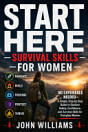
About this ebook
You walk through crowded streets believing yourself safe. You enter buildings assuming exits exist. You travel unfamiliar cities trusting ordinary luck. These assumptions kill thousands annually. Criminals, predators, and hostile actors exploit civilian complacency systematically. They select targets based on vulnerability signals you broadcast unknowingly. This book changes that equation permanently.
100 Deadly Skills: The SEAL Operative's Guide to Evading Pursuers, Avoiding Capture, and Surviving Any Dangerous Situation transforms ordinary individuals into capable operators. No special equipment required. No martial arts background necessary. No physical conditioning prerequisite. These techniques work for anyone willing to learn.
What You Will Learn
Survival begins in the mind. Chapter One establishes operative consciousness—the psychological framework enabling clear thinking when panic threatens others. You discover how to control fear, make decisions under extreme stress, and maintain discipline when chaos surrounds you.
Awareness prevents most attacks. Chapter Two reveals how predators select victims and how to recognize danger before it strikes. You learn to read human behavior instantly, detect surveillance, and identify high-risk environments. This knowledge alone reduces your vulnerability dramatically.
Evasion enables escape. Chapters Three through Six provide practical techniques for breaking visual pursuit, disappearing into crowds, navigating urban terrain, and moving without detection. When threats materialize, these skills create separation and safety.
Physical resistance becomes necessary when other options fail. Chapters Four and Seven teach restraint escape, improvised defense, and survival combat using everyday objects. Distance control, disarming principles, and escalation awareness give you options when confrontation becomes unavoidable.
Psychological resistance protects information and judgment. Chapter Eight addresses manipulation recognition, interrogation composure, and mental fatigue resistance. When others break, you remain intact.
Medical emergencies demand immediate response. Chapter Ten covers life-threatening bleeding control, trauma management, improvised first aid, and stabilization until help arrives. These skills save lives—including your own.
Systems ensure sustained protection. Chapters Eleven and Twelve provide escape planning, safe zone mapping, daily security habits, and long-term survival frameworks. Preparation becomes automatic rather than exhausting.
Who This Book Serves
The daily commuter facing crowded transit, unknown environments, and potential threats during routine travel.
The business traveler navigating unfamiliar cities, hotels, and transportation systems where local knowledge remains limited.
The concerned parent wanting family protection skills without teaching fear or paranoia.
The urban resident living where crime, civil unrest, or natural disasters create genuine danger.
The preparedness enthusiast seeking operational techniques beyond basic survival skills.
The security professional wanting comprehensive reference material for training or personal development.
Every person who refuses to remain vulnerable.
What Sets This Book Apart
Operational authenticity. Techniques derive from decades of field experience, real-world application, and proven effectiveness under extreme conditions. Theory remains absent. Practical application dominates every page.
Urban focus. Most survival literature addresses wilderness scenarios. This book recognizes where people actually live, work, and travel. Cities present unique dangers requiring specialized approaches.
Integrated system. Individual skills combine into comprehensive capability. Situational awareness supports evasion. Evasion enables escape. Escape allows survival. Each chapter builds upon previous content.
Accessible instruction. Complex techniques break down into clear, actionable steps. No prior experience required. Physical conditioning unnecessary. These skills work for anyone.
Psychological emphasis. Mental preparation precedes physical technique. Understanding predator psychology, manipulation recognition, and stress management provides protection unavailable through equipment alone.
What You Will Not Find
This book does not promote paranoia or fear. It does not suggest retreating from society. It does not advocate unnecessary violence. Genuine preparedness enhances life rather than restricting it. Awareness without obsession. Capability without aggression. Confidence without arrogance. This balance defines operative approach.
Practical Application
Daily practice exercises integrate skills into ordinary routines. Observation training during commutes. Exit identification when entering buildings. Awareness development during shopping. Small efforts compound into significant capability.
Realistic scenarios prepare for actual emergencies. Multi-threat urban escapes. Night-time movement challenges. Improvised evacuations under pressure. Capture avoidance situations. Practice builds automatic response.
Comprehensive coverage addresses all survival domains. Physical techniques. Psychological resilience. Medical skills. Evasion tactics. Escape methods. Security systems. Complete preparation provides complete protection.
Guarantee
You will finish this book with greater capability than when you began. Your awareness expands. Your confidence grows. Your preparation improves. Every reader discovers techniques applicable to daily life immediately. No special equipment required. No previous experience necessary. Just willingness to learn and practice.
Call to Action
Civilian complacency kills. Operative consciousness saves. Choose which mindset defines your existence.
Scroll up. Click purchase. Begin your transformation today.
Discover more
Ratings and reviews
About the author
John Williams is a nonfiction writer focused on survival strategy, situational awareness, and real-world emergency preparedness. His work is centered on simplifying complex fieldcraft concepts into practical, actionable knowledge that readers can apply in high-pressure environments.
He specializes in translating operational principles—such as movement discipline, risk awareness, and crisis decision-making—into clear, structured guidance for everyday readers, first responders, outdoor enthusiasts, and security-minded individuals.
Through his writing, John Williams aims to bridge the gap between professional-level survival thinking and civilian readiness, helping readers develop sharper awareness, stronger mental resilience, and more confident decision-making in unpredictable situations.
When not developing structured survival guides, he continues to explore topics related to personal safety systems, environmental awareness, and practical preparedness strategies designed for real-world application.