About this ebook
In 'The Elements of Perspective,' John Ruskin explores the intricate relationship between visual perception and artistic representation, presenting a rich tapestry of ideas that bridge art, architecture, and nature. Written with characteristic clarity, Ruskin employs both practical instruction and philosophical underpinnings to elucidate the laws of perspective. He draws upon examples from the great masters of art, inviting readers to appreciate how perspective shapes not only our view of the physical world but also our emotional and intellectual engagement with it. This book serves as a critical discourse on the importance of perspective in both the interpretation and creation of art, establishing a framework that resonates with the aesthetics of the Victorian era, while foreshadowing modernist explorations of visual perception. John Ruskin, a prominent art critic, social thinker, and philanthropist, was instrumental in shaping the Victorian understanding of art and architecture. His deep engagement with nature and moral philosophy profoundly influenced his writing, as he sought to unify beauty with ethics. Ruskin's early education and experiences in Europe, combined with his dedication to the Pre-Raphaelite movement, motivated him to challenge conventional artistic practices, culminating in this seminal work. 'The Elements of Perspective' is a must-read for artists, historians, and anyone interested in the interplay between sight and representation. Ruskin's insights will not only enhance your appreciation of art but also inspire a deeper understanding of how perspective informs our reality. This work invites readers to reconsider the visual world around them, making it an essential addition to any scholarly collection. In this enriched edition, we have carefully created added value for your reading experience: - A succinct Introduction situates the work's timeless appeal and themes. - The Synopsis outlines the central plot, highlighting key developments without spoiling critical twists. - A detailed Historical Context immerses you in the era's events and influences that shaped the writing. - An Author Biography reveals milestones in the author's life, illuminating the personal insights behind the text. - A thorough Analysis dissects symbols, motifs, and character arcs to unearth underlying meanings. - Reflection questions prompt you to engage personally with the work's messages, connecting them to modern life. - Hand‐picked Memorable Quotes shine a spotlight on moments of literary brilliance. - Interactive footnotes clarify unusual references, historical allusions, and archaic phrases for an effortless, more informed read.
In 'The Elements of Perspective,' John Ruskin explores the intricate relationship between visual perception and artistic representation, presenting a rich tapestry of ideas that bridge art, architecture, and nature. Written with characteristic clarity, Ruskin employs both practical instruction an...
Discover more
About the author
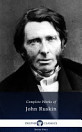
John Ruskin (1819–1900) was a multifaceted English writer, art critic, draughtsman, and reformer, lauded for his profound insight and poetic eloquence. Ruskin's influence extended beyond his prolific literary outputs, touching the realms of education, social theory, and aesthetics. Born in London, Ruskin showed an early proclivity for writing and art. He attended Christ Church, Oxford, where he won the Newdigate Prize for his poetry, signaling his emerging literary potential. Ruskin's magnum opus 'Modern Painters' (1843–1860) established his reputation as a pre-eminent art critic, advocating for the naturalism of J.M.W. Turner and bringing Victorian attention to the spiritual and emotional significance of art. 'The Stones of Venice' (1851–1853), another central work, explored the significance of Gothic architecture, infusing aesthetic appreciation with moral and social considerations. 'The Elements of Perspective' (1859), though less prominent, contributed to his educational oeuvre, extending his art didactics to a broader audience and elucidating the principles of perspective in drawing and painting. Ruskin's eloquence and analytical prowess in dissecting art and society were underscored by a didactic zeal; he aspired to ameliorate the human condition through a confluence of beauty, art, and conscientious labor. Not limited to the art historical sphere, Ruskin's essays and treatises, like 'Unto This Last' (1862) and 'Sesame and Lilies' (1865), reflected on ethics, economics, and gender roles, and became foundational texts inspiring the Arts and Crafts Movement and influencing figures such as Gandhi and Tolstoy. Ruskin's literary and intellectual legacy remains robust, testifying to his role as a visionary thinker of the Victorian era.
John Ruskin (1819–1900) was a multifaceted English writer, art critic, draughtsman, and reformer, lauded for his profound insight and poetic eloquence. Ruskin's influence extended beyond his prolific literary outputs, touching the realms of education, social theory, and aesthetics. Born in London...
Rate this ebook
Tell us what you think.
Reading information
Smartphones and tablets
Install the Google Play Books app for Android and iPad/iPhone. It syncs automatically with your account and allows you to read online or offline wherever you are.
Laptops and computers
You can listen to audiobooks purchased on Google Play using your computer's web browser.
eReaders and other devices
To read on e-ink devices like Kobo eReaders, you'll need to download a file and transfer it to your device. Follow the detailed Help Center instructions to transfer the files to supported eReaders.