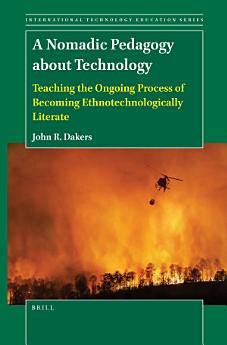
A Nomadic Pedagogy about Technology: Teaching the Ongoing Process of Becoming Ethnotechnologically Literate
Nov 2022 · BRILL
Ebook
218
Pages
Tools
info
About this ebook
Although technology education is in desperate need of reform, the new refuses to be born. Despite the introduction of technological literacy, the evolving merger with science, mathematics and engineering (STEM), and even a proposed merger between STEM and the arts (STEAM), nothing has changed. The subject continues to be a craft-based, vocationally orientated subject.
Human beings have always had a relationship with technology, but never before has the progression of technological development had such an impact on the environment, one which has led to the birth of the Anthropocene. This poses the greatest existential threat ever known to the future of human existence.
Those in power continue to turn a blind eye to this threat. Moreover, technology education today does not reflect issues relating to our technologically textured lifeworld. Given that it is the young who will inherit this potentially dystopic future, they must be given a voice, one in which they can reimagine their futures in a sustainable way. This book explores the development of ethnotechnological literacy, as delivered by a radical new nomadic pedagogy inspired by the philosophy of Deleuze and Guattari; one that can enable these voices to be expressed and more importantly, to be heard.
Although technology education is in desperate need of reform, the new refuses to be born. Despite the introduction of technological literacy, the evolving merger with science, mathematics and engineering (STEM), and even a proposed merger between STEM and the arts (STEAM), nothing has changed. Th...
Discover more
About the author
John R. Dakers is a researcher affiliated with TU Delft university. He has published books and articles on the concept of technological literacy, including Defining Technological Literacy and New Frontiers on Technological Literacy (2014).
John R. Dakers is a researcher affiliated with TU Delft university. He has published books and articles on the concept of technological literacy, including Defining Technological Literacy and New Frontiers on Technological Literacy (2014).
Rate this ebook
Tell us what you think.
Reading information
Smartphones and tablets
Install the Google Play Books app for Android and iPad/iPhone. It syncs automatically with your account and allows you to read online or offline wherever you are.
Laptops and computers
You can listen to audiobooks purchased on Google Play using your computer's web browser.
eReaders and other devices
To read on e-ink devices like Kobo eReaders, you'll need to download a file and transfer it to your device. Follow the detailed Help Center instructions to transfer the files to supported eReaders.